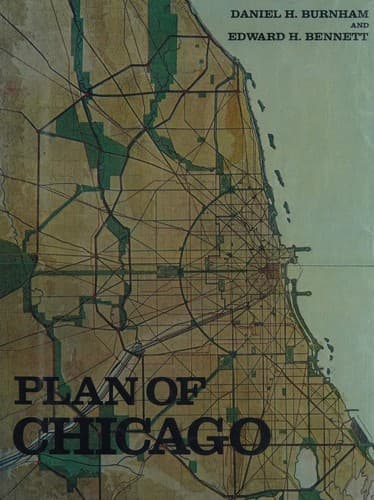
City planning -- Illinois -- Chicago -- History -- 20th century
It is highly important that the city should be able effectively to
control the traffic on streets and boulevards, and especially to keep
designated residence streets free from heavy teaming or particular
kinds of traffic (such as through teaming, not going to or from
property fronting on the particular street), without formally turning
such streets over to park authorities as boulevards. This power may be
given by the 96th paragraph of Section 1 of Article V of the statute in
relation to cities, villages, and towns,[48] which authorizes the city
council to “direct, license, and control all wagons and other vehicles
conveying loads within the city, or any particular class of such wagons
or other vehicles.” If more specific authority is required, it should
be obtained from the legislature. The streets are held by the city in
trust for the general public and cannot be diverted from that purpose
by the city without special authority.[49] The legislature, however, as
representative of the public, has control over them, and may limit the
public right to make free use of streets; as it actually has done in
the statute authorizing the wheel tax.[50] It may authorize municipal
authorities to designate certain streets as pleasure driveways, to the
exclusion of heavy traffic,[51] or to turn over any of its streets
to park boards for boulevard and driveway purposes;[52] but the city
cannot, without legislative authority, divest itself of the control of
a street nor restrict the public in the reasonable use and enjoyment
thereof.[53] General authority has been conferred upon city councils to
regulate the use of streets, but this provision of the statute cannot
safely be relied upon as an unqualified delegation of power to set
aside some streets for exclusive use as pleasure driveways, since the
Act of March 27, 1889,[54] expressly empowers the municipal authorities
of a city or village to select for that purpose _not more than two
streets_ within the corporate limits. This doubt the legislature should
be asked to set at rest.
The narrow scope of the powers of Cook County has already been
commented upon. While counties could not, under the present
constitution, be authorized to pay for improvements by special
assessment, the general assembly might empower the county board to
purchase or condemn land within or without the city limits for parks or
other public uses, the cost to be paid from the proceeds of any bond
issues which the people might see fit to vote within the five per cent
limit of indebtedness. A park commission or forest-preserve commission,
established as an administrative department of the county government,
would be an appropriate agency for carrying out these objects.
Public-domain text, read in full here on John Shaqi.
Reviews
Reviews
No reviews yet
Be the first to share your thoughts on this work.
Elsewhere in the archive
Join the Discussion
Join the discussion
Sign in to leave a comment or review.
Sign InorCreate an account