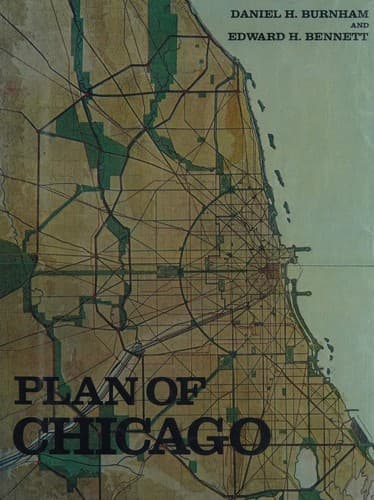
City planning -- Illinois -- Chicago -- History -- 20th century
During the second half of the nineteenth century the population of
Chicago increased from thirty thousand to two millions of people.
To-day all conditions point to continued gains. The days of chance and
uncertainty are past. The days of doubtful ventures are gone, and the
hazards of new fortunes. The elements which make for the greatness of
the city are known to be permanent; and men realize that the time has
now come to build confidently on foundations already laid.
The growth of the city has been so rapid that it has been impossible
to plan for the economical disposition of the great influx of people,
surging like a human tide to spread itself wherever opportunity for
profitable labor offered place. Thoughtful people are appalled at
the results of progress; at the waste in time, strength, and money
which congestion in city streets begets; at the toll of lives taken
by disease when sanitary precautions are neglected; and at the
frequent outbreaks against law and order which result from narrow and
pleasureless lives. So that while the keynote of the nineteenth century
was expansion, we of the twentieth century find that our dominant idea
is conservation. The people of Chicago have ceased to be impressed by
rapid growth or the great size of the city. What they insist asking
now is, How are we living? Are we in reality prosperous? Is the city a
convenient place for business? It is a good labor market in the sense
that labor is sufficiently comfortable to be efficient and content?
Will the coming generation be able to stand the nervous strain of city
life? When a competence has been accumulated, must we go elsewhere to
enjoy the fruits of independence? If the city does not become better as
it become bigger, shall not the defect be remedied? These are questions
that will not be brushed aside. They are the most pressing questions of
our day, and everywhere men are anxiously seeking the answers.
The remark is often heard, that if, after the great fire of 1871, the
people had realized what the future growth of the city would be, they
would have saved a vast amount of money by planning for a convenient
city. The undaunted courage with which a debt-burdened community of
three hundred and fifty thousand people then set about rebuilding their
city must absolve them from the charge of lack of foresight. To-day
there is no excuse for the second city in the United States with its
destiny made manifest and its wealth secure, if it shall now fail to
keep pace with the march of progress that is gathering into its ranks
the progressive cities of the world.
Public-domain text, read in full here on John Shaqi.
Reviews
Reviews
No reviews yet
Be the first to share your thoughts on this work.
Join the Discussion
Join the discussion
Sign in to leave a comment or review.
Sign InorCreate an account