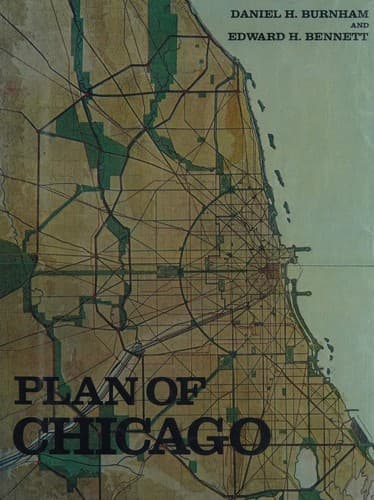
City planning -- Illinois -- Chicago -- History -- 20th century
The suburban resident is vitally interested in the means of
communication between his home and his place of business. If his
morning and his evening ride are made on the steam railway, he is
interested not only in passing through pleasant scenes on his way
to and from Chicago, but he is concerned also in having the railway
station in his suburban town conveniently located, constructed simply
but artistically, and placed amid surroundings which in themselves are
harmonious and appropriate. A well-kept lawn, with shrubbery shutting
out the necessarily unpleasant feature of a steam railway station; a
sheltered platform well lighted at night, and a commodious station,
architecturally in good taste—these accessories go a long way towards
mitigating the nerve strain which every business man feels and from
which too many suffer.
The electric railroads, with their frequent cars passing one’s very
door, have done a vast deal to bind the outlying towns firmly to the
central city. More than this, they have promoted neighborliness among
people of adjoining towns, and have broken up the isolation of farm
life. These roads now strive to obtain private rights-of-way, excepting
where for the convenience of passengers they pass through city streets;
and the same observations as to good order along the routes and at the
terminals that appertain to steam roads apply equally to trolley lines.
The rapidly increasing use of the automobile promises to carry on
the good work begun by the bicycle in the days of its popularity in
promoting good roads and reviving the roadside inn as a place of rest
and refreshment. With the perfection of this machine, and the extension
of its use, out-of-door life is promoted, and the pleasures of suburban
life are brought within the reach of multitudes of people who formerly
were condemned to pass their entire time in the city.
While the people generally have yet to be brought to appreciate the
value of well-constructed highways, the universal experience is that
where a stretch of good road has been built the saving in time and
money is so great and so apparent that the movement gathers force
rapidly, and culminates only when all main lines have been completed.
Land adjacent to such roads increases in value and finds a readier
sale; the farmer is no longer cut off from his market, and often he
finds it possible to lessen the number of horses he keeps. The actual
economies which the good road allows far exceed the increase in taxes
necessary to meet the bond issue, and life on the farm becomes more
profitable as well as more agreeable.
[Illustration: XLII. VIEW OF LAKE ZURICH, ILLINOIS.]
FOOTNOTES:
Public-domain text, read in full here on John Shaqi.
Reviews
Reviews
No reviews yet
Be the first to share your thoughts on this work.
Join the Discussion
Join the discussion
Sign in to leave a comment or review.
Sign InorCreate an account