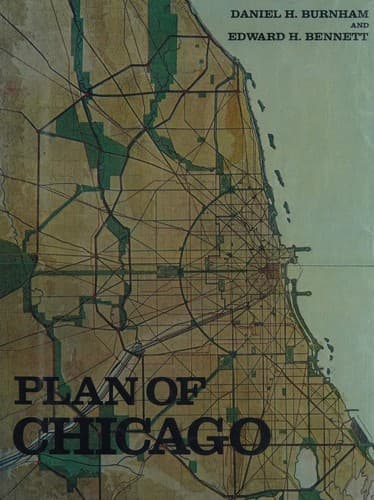
City planning -- Illinois -- Chicago -- History -- 20th century
COPYRIGHT, 1909, BY COMMERCIAL CLUB OF CHICAGO ]
The thoroughfares of a city may be divided into three classes: the
street, by which is meant the general type of artery; the avenue,
on which tides of traffic and travel surge back and forth; and the
boulevard, designed primarily as a combination of park and driveway.
The first consideration for all thoroughfares is cleanliness,
which is the result of a good roadbed kept in thorough repair, and
unremitting care on the part of the city cleaning department. In the
congested retail district the desirable street width is from 80 to
100 feet, about equally divided between sidewalks and roadway. Here
the pavement should be smooth and noiseless; there should be frequent
islands of safety for the pedestrian crossing from side to side,
and occasional subway crossings; and the lighting, the signs, and
every accessory of the street should be arranged with regard to the
dictates of good taste. For streets carrying heavy tonnage a width
of from 70 to 90 feet is desirable, with a roadway width of a little
more than one-half the entire space, and here the pavements should be
of the most enduring character, regardless of noise.[22]
[Illustration: XC. CHICAGO. THEORETICAL DIAGRAM OF STREET
CIRCULATION, SHOWING EXISTING LINES OF TRAVEL (BLACK), AND PROPOSED
SUPPLEMENTARY LINES (ORANGE).
Circulation from north to south and east to west is already
established by the rectilinear system of streets. There is need of
additional facilities to be provided by street widenings and new
arteries. Circulation towards the center is partially established,
but the arteries need extending and developing, and circulation
across the city from the northwest to the south and east and from the
southwest to the north is lacking. It is proposed to remedy this lack
by extending existing diagonal streets.
COPYRIGHT, 1909, BY COMMERCIAL CLUB OF CHICAGO ]
On residence streets the area devoted to pavement may well be
lessened to from 20 to 36 feet, according to the amount of traffic,
in order that greater area may be obtained for trees and grass plots.
This is highly desirable where, as in some sections is inevitable,
houses are crowded together or apartment buildings abound, so
that the smaller children may have playgrounds close at hand, and
restful shade may prevail. A well-kept grass plot in front of the
house induces habits of neatness and comfort within; and cool shade
brings people from cellars and dark rooms out into the light, thus
contributing to good order and a higher morality.
Public-domain text, read in full here on John Shaqi.
Reviews
Reviews
No reviews yet
Be the first to share your thoughts on this work.
Elsewhere in the archive
Join the Discussion
Join the discussion
Sign in to leave a comment or review.
Sign InorCreate an account