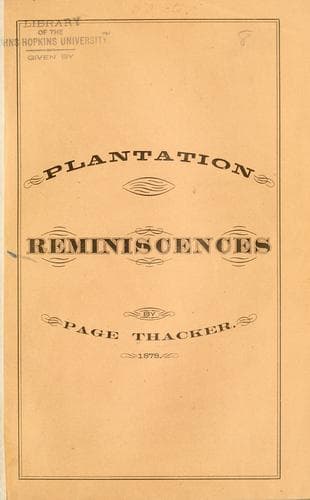
Plantation life; Virginia -- Social life and customs
"They were placed here," replied our mother, "by God, for us to
take care of, and it does not seem that we can change it. When we
emancipate them, it does not better their condition. Those left free
and with good farms given them by their masters, soon sink into
poverty and wretchedness, and become a nuisance to the community.
We see how miserable are Mr. Randolph's[2] negroes, who with their
freedom received from their master a large body of the best land in
Prince Edward county. My own grandfather also emancipated a large
number, having first had them taught lucrative trades that they might
support themselves, and giving them money and land. But they were not
prosperous or happy. We have also tried sending them to Liberia. You
know my old friend, Mrs. L----, emancipated all her's and sent them
to Liberia, but she told me the other day she was convinced it had
been no kindness to them, for she continually receives letters begging
assistance, and yearly supplies them with clothes and money."
So it seemed our way was "hedged about" and surrounded by walls of
circumstances too thick and solid to be pulled down, and we said no
more.
But some weeks after this conversation, we had a visit from a
friend--"Mozis Addums"--who having lived in New York and hearing us
express a wish to live there, said:
"What! exchange a home in old Virginia for one on Fifth Avenue? You
don't know what you are talking about! They are not even called 'homes'
there, but '_house_;' where they turn into bed at midnight; eat
stale-bread breakfasts; have brilliant parties--where several thousand
people meet who don't care anything about each other. They have no soul
life; but shut themselves up in themselves, live for themselves, and
never have any social enjoyment like ours."
"But," we said, "could not our friends come to see us there as well as
anywhere else?"
"No indeed!" he answered. "Your hearts would soon be as cold and dead
as your marble door-fronts. You wouldn't want to see anybody, and
nobody would want to see you."
"You are complimentary, certainly!"
"I know all about it; and," he continued, "I know you could not find on
Fifth Avenue such women as your mother and grandmother, who never think
of themselves, but are constantly planning and providing for others,
making their homes comfortable and pleasant, and attending to the wants
and welfare of so many negroes. And that is what the women all over the
South are doing and what the New York women cannot comprehend. How can
anybody know, except ourselves, the personal sacrifices of our women?"
"Well," said my sister, "you need not be so severe and eloquent because
we thought we would like to live in New York! If we should sell all we
possess, we could never afford to live there. Besides, you know our
mother would as soon think of selling her children as her servants--who
indeed are beginning to possess _her_, instead of her possessing them."
Public-domain text, read in full here on John Shaqi.
Reviews
Reviews
No reviews yet
Be the first to share your thoughts on this work.
Join the Discussion
Join the discussion
Sign in to leave a comment or review.
Sign InorCreate an account