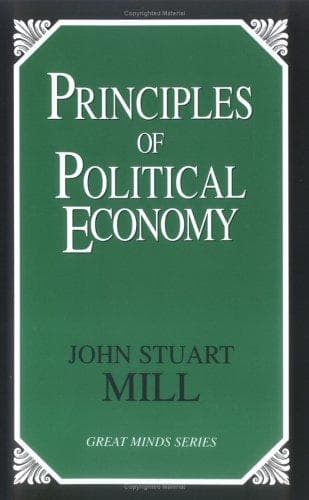
Principles of Political Economy: Abridged with Critical, Bibliographical, and Explanatory Notes, and a Sketch of the History of Political EconomyMill, John Stuart
PhilosophyPhilosophy
Principles of Political Economy: Abridged with Critical, Bibliographical, and Explanatory Notes, and a Sketch of the History of Political Economy
Mill, John Stuart
Economics
Catharine of Russia, and the Margrave of Baden.(20) Agriculture,
therefore, received a great stimulus.
Quesnay had many vigorous supporters, of whom the most conspicuous was the
Marquis de Mirabeau(21) (father of him of the Revolution), and the
culmination of their popularity was reached about 1764. A feeling that the
true increase of wealth was not in a mere increase of money, but in the
products of the soil, led them naturally into a reaction against
mercantilism, but also made them dogmatic and overbearing in their
one-sided system, which did not recognize that labor in all industries
created wealth. As the mercantile system found a great minister in Colbert
to carry those opinions into effect on a national scale, so the
Physiocrats found in Turgot(22) a minister, under Louis XVI, who gave them
a national field in which to try the doctrines of the new school.
Benevolently devoted to bettering the condition of the people while
Intendant of Limoges (1751), he was made comptroller-general of the
finances by Louis XVI in 1774. Turgot had the ability to separate
political economy from politics, law, and ethics. His system of freeing
industry from governmental interference resulted in abolishing many
abuses, securing a freer movement of grain, and in lightening the
taxation. But the rigidity of national prejudices was too strong to allow
him success. He had little tact, and raised many difficulties in his way.
The proposal to abolish the _corvées_ (compulsory repair of roads by the
peasants), and substitute a tax on land, brought his king into a costly
struggle (1776), and attempts to undermine Turgot’s power were successful.
With his downfall ended the influence of the Economists. The last of them
was Dupont de Nemours,(23) who saw a temporary popularity of the
Physiocrats in the early years of the French Revolution, when the
Constituent Assembly threw the burden of taxes on land. But the fire
blazed up fitfully for a moment, only to die away entirely.
Public-domain text, read in full here on John Shaqi.
Reviews
Reviews
No reviews yet
Be the first to share your thoughts on this work.
Join the Discussion
Join the discussion
Sign in to leave a comment or review.
Sign InorCreate an account