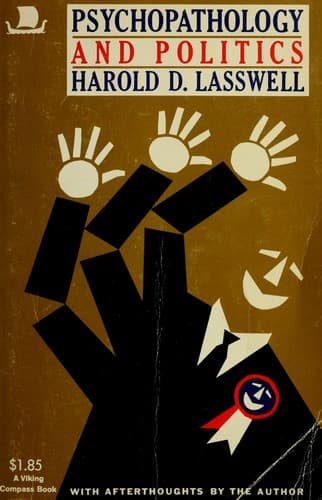
Psychopathology and politicsLasswell, Harold D. (Harold Dwight)
Science
Psychopathology and politics
Lasswell, Harold D. (Harold Dwight)
Personality and politics; Political science; Psychoanalysis; Psychology, Pathological
1. Does not assume a friendly mask (exterior) even though
he sees it would be an advantage (seeks to escape, becomes
stubborn, surly, assaultive, joins anti-authoritation acts
engaged in by associates, continues to contemplate revenge long
after)
2. Does not see or press up own individual advantage because
of attachment or intimidation (deference without conscious
hostility, pronounced affection, intimidated sacrifice of
associates to curry favor, overgratitude)
3. Combines friendly mask with conscious acts of hostility
(plays up qualities admired by chief, whether imitative of
chief or expressive of the chief’s repressions)
4. Irrational elements in adaptation at a minimum
II. As authority
Confronted by subordinates who are
A. Strong, hostile, dangerous rivals
B. Strong and objective
C. Weak
Reaction
1. Does not refrain from taking up a hostile front even when it
is recognized to be inappropriate
2. Takes apparently friendly line while pursuing hostile
purposes
3. Does not take strong-enough measures to secure efficiency or
respect (too indulgent of mirrors of self or of those who work
out frustrations)
4. Objective (inflicts narcissistic wound when advantageous,
reassures when useful, develops abilities of subordinates,
thwarts when dangerous)
III. In dealing with possible helper or obstructor who is outside
organization (most effective tactics chosen and range of tactics)
Appeals to logical standards
Appeals to sentiment
Non-violent and violent coercion
Inducement (tangible advantage)
IV. In dealing with public
Types of tactics chosen, success
Forms of expression, thought, and interest may be singled out for
special consideration. What is intended here is sufficiently apparent
from the captions:
SECTION C. FORMS OF EXPRESSION, THOUGHT, INTEREST
I. Forms of expression
(Includes all symbolizing forms: political editorials, novels,
poems, paintings, cartoons, plastic media, plays, acting)
Most effective style
Analytical and dialectical
Persecutory (sarcastic, denunciatory)
Enthusiastic
Humorous
Commanding
Range of style wide or limited
II. Mode of thought
Public-domain text, read in full here on John Shaqi.
Reviews
Reviews
No reviews yet
Be the first to share your thoughts on this work.
Elsewhere in the archive
Join the Discussion
Join the discussion
Sign in to leave a comment or review.
Sign InorCreate an account