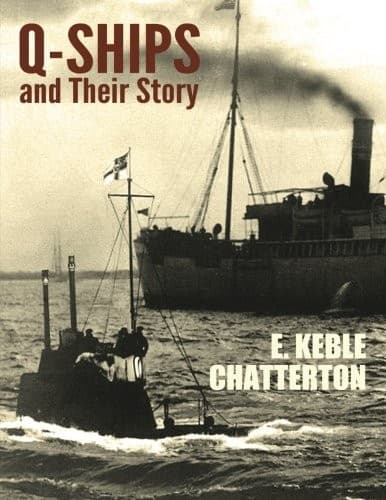
Q-Ships and Their StoryChatterton, E. Keble (Edward Keble)
History
Q-Ships and Their Story
Chatterton, E. Keble (Edward Keble)
Q-ships; World War, 1914-1918 -- Naval operations
Who can avoid a feeling of intense admiration for the men who, year
after year, were willing and eager to roll about the sea in a small
sailing ship looking for the enemy, well knowing that the enemy had
all the advantage of speed, handiness, and armament? Even the motor
was not powerful, and would give her not much more than steerage way
in a calm. The submarine could always creep up submerged, using his
periscope but now and then: the schooner, however, was a conspicuous
target all the time, and her masts and sails advertised her presence
from the horizon. These Q-ship sailing men deserve much for what
they voluntarily endured. Quite apart from the bad weather, the
uncomfortable quarters on board, the constant trimming of sheets
and alteration of course off an unlit coast, there was always the
possibility that some U-boat’s crew would, after sinking the schooner,
cut the throats of these British seamen. The Q-ship crews knew this,
and on certain occasions when U-boat prisoners were taken by our ships
the Germans did not conceal this fact. Life in these sailing craft
was something quite different from that in a battleship with its
wardroom, its cheery society, and a comfortable cabin to turn into.
In the latter, with powerful turbines and all the latest navigational
instruments, bad weather meant little inconvenience. After all it
is the human element which is the deciding factor, and the Q-ship
service certainly wore out officers and men at a great pace. It is
indeed difficult to imagine any kind of seafaring more exacting both
physically and nervously.
But the Navy pressed into its use also sailing smacks, and sent
them out to sea. This began at Lowestoft in August, 1915. In that
neighbourhood submarines had been doing a great deal of damage to the
local fishing ketches, so it was decided to commission four of these
smacks, arm them, strengthen their fishing crew with a few active
service ratings for working the gun, and let the craft resume their
fishing among the other smacks. With any luck at all a German submarine
should come along, and then would follow the surprise. The original
fishermen crews were only too delighted to have an opportunity of
getting their own back, and these excellent fellows certainly were
afforded some good sport. So well did the idea work that within a
very few days the smack _G. and E._ engaged one submarine, and the
_Inverlyon_ sank UB 4. During the same month the smack _Pet_ fought a
submarine, and on September 7 _Inverlyon_ had a fight with another.
Public-domain text, read in full here on John Shaqi.
Reviews
Reviews
No reviews yet
Be the first to share your thoughts on this work.
Join the Discussion
Join the discussion
Sign in to leave a comment or review.
Sign InorCreate an account