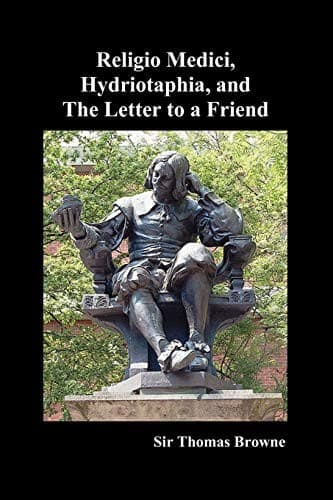
Religio Medici, Hydriotaphia, and the Letter to a FriendBrowne, Thomas, Sir
Religion
Religio Medici, Hydriotaphia, and the Letter to a Friend
Browne, Thomas, Sir
Christian ethics; Christian life; Essays; Funeral rites and ceremonies; Medical ethics; Medicine -- History; Religion and medicine
That they carried them out of the world with their feet forward,
not inconsonant unto reason, as contrary unto the native posture of
man, and his production first into it; and also agreeable unto their
opinions, while they bid adieu unto the world, not to look again upon
it; whereas Mahometans who think to return to a delightful life again,
are carried forth with their heads forward, and looking toward their
houses.
They closed their eyes, as parts which first die, or first discover the
sad effects of death. But their iterated clamations to excitate their
dying or dead friends, or revoke them unto life again, was a vanity of
affection; as not presumably ignorant of the critical tests of death,
by apposition of feathers, glasses, and reflection of figures, which
dead eyes represent not: which, however not strictly verifiable in
fresh and warm _cadavers_, could hardly elude the test, in corpses of
four or five days.
That they sucked in the last breath of their expiring friends, was
surely a practice of no medical institution, but a loose opinion that
the soul passed out that way, and a fondness of affection, from some
Pythagorical foundation, that the spirit of one body passed into
another, which they wished might be their own.
That they poured oil upon the pyre, was a tolerable practice, while
the intention rested in facilitating the ascension. But to place good
omens in the quick and speedy burning, to sacrifice unto the winds for
a despatch in this office, was a low form of superstition.
The archimime, or jester, attending the funeral train, and imitating
the speeches, gesture, and manners of the deceased, was too light for
such solemnities, contradicting their funeral orations and doleful
rites of the grave.
That they buried a piece of money with them as a fee of the Elysian
ferryman, was a practice full of folly. But the ancient custom of
placing coins in considerable urns, and the present practice of
burying medals in the noble foundations of Europe, are laudable ways
of historical discoveries, in actions, persons, chronologies; and
posterity will applaud them.
We examine not the old laws of sepulture, exempting certain persons
from burial or burning. But hereby we apprehend that these were not
the bones of persons planet-struck or burnt with fire from heaven; no
relicks of traitors to their country, self-killers, or sacrilegious
malefactors; persons in old apprehension unworthy of the earth;
condemned unto the Tartarus of hell, and bottomless pit of Pluto, from
whence there was no redemption.
Public-domain text, read in full here on John Shaqi.
Reviews
Reviews
No reviews yet
Be the first to share your thoughts on this work.
Elsewhere in the archive
Join the Discussion
Join the discussion
Sign in to leave a comment or review.
Sign InorCreate an account