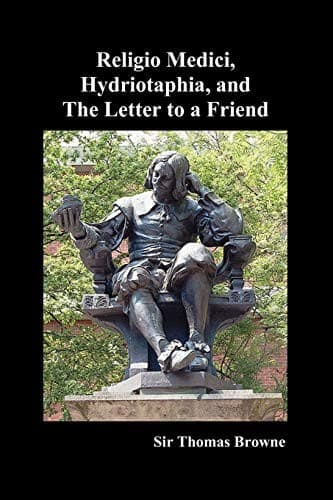
Religio Medici, Hydriotaphia, and the Letter to a FriendBrowne, Thomas, Sir
Religion
Religio Medici, Hydriotaphia, and the Letter to a Friend
Browne, Thomas, Sir
Christian ethics; Christian life; Essays; Funeral rites and ceremonies; Medical ethics; Medicine -- History; Religion and medicine
Pythagoras escapes in the fabulous hell of Dante,[BO] among that swarm
of philosophers, wherein, whilst we meet with Plato and Socrates, Cato
is to be found in no lower place than purgatory. Among all the set,
Epicurus is most considerable, whom men make honest without an Elysium,
who contemned life without encouragement of immortality, and making
nothing after death, yet made nothing of the king of terrors.
[BO] _Del Inferno_, cant. 4.
Were the happiness of the next world as closely apprehended as the
felicities of this, it were a martyrdom to live; and unto such as
consider none hereafter, it must be more than death to die, which makes
us amazed at those audacities that durst be nothing and return into
their chaos again. Certainly such spirits as could contemn death, when
they expected no better being after, would have scorned to live, had
they known any. And therefore we applaud not the judgment of Machiavel,
that Christianity makes men cowards, or that with the confidence of
but half-dying, the despised virtues of patience and humility have
abased the spirits of men, which Pagan principles exalted; but rather
regulated the wildness of audacities in the attempts, grounds, and
eternal sequels of death; wherein men of the boldest spirits are often
prodigiously temerarious. Nor can we extenuate the valour of ancient
martyrs, who contemned death in the uncomfortable scene of their lives,
and in their decrepit martyrdoms did probably lose not many months of
their days, or parted with life when it was scarce worth the living.
For (beside that long time past holds no consideration unto a slender
time to come) they had no small disadvantage from the constitution
of old age, which naturally makes men fearful, and complexionally
superannuated from the bold and courageous thoughts of youth and
fervent years. But the contempt of death from corporal animosity,
promoteth not our felicity. They may sit in the orchestra, and noblest
seats of heaven, who have held up shaking hands in the fire, and
humanly contended for glory.
Meanwhile Epicurus lies deep in Dante’s hell, wherein we meet with
tombs enclosing souls which denied their immortalities. But whether
the virtuous heathen, who lived better than he spake, or erring in the
principles of himself, yet lived above philosophers of more specious
maxims, lie so deep as he is placed, at least so low as not to rise
against Christians, who believing or knowing that truth, have lastingly
denied it in their practice and conversation--were a query too sad to
insist on.
Public-domain text, read in full here on John Shaqi.
Reviews
Reviews
No reviews yet
Be the first to share your thoughts on this work.
Elsewhere in the archive
Join the Discussion
Join the discussion
Sign in to leave a comment or review.
Sign InorCreate an account