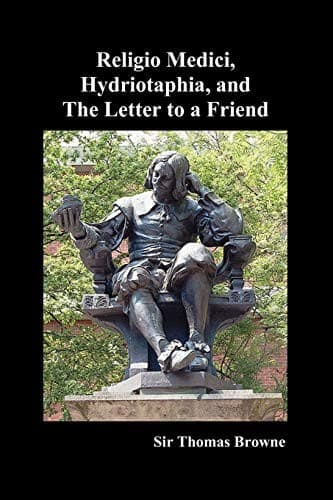
Religio Medici, Hydriotaphia, and the Letter to a Friend — John Shaqi
Religio Medici, Hydriotaphia, and the Letter to a FriendBrowne, Thomas, Sir
Religion
Religio Medici, Hydriotaphia, and the Letter to a Friend
Browne, Thomas, Sir
Christian ethics; Christian life; Essays; Funeral rites and ceremonies; Medical ethics; Medicine -- History; Religion and medicine
will flourish till it be condemned again. For, as though there were
metempsychosis, and the soul of one man passed into another, opinions
do find, after certain revolutions, men and minds like those that
first begat them. To see ourselves again, we need not look for Plato’s
year:[B] every man is not only himself; there have been many Diogenes,
and as many Timons, though but few of that name; men are lived over
again; the world is now as it was in ages past; there was none then,
but there hath been some one since, that parallels him, and is, as it
were, his revived self.
[B] A revolution of certain thousand years, when all things should
return unto their former estate, and he be teaching again in his
school, as when he delivered this opinion.
_Sect._ 7.--Now, the first of mine was that of the Arabians;[9] that
the souls of men perished with their bodies, but should yet be raised
again at the last day: not that I did absolutely conceive a mortality
of the soul, but, if that were (which faith, not philosophy, hath yet
thoroughly disproved), and that both entered the grave together, yet
I held the same conceit thereof that we all do of the body, that it
rise again. Surely it is but the merits of our unworthy natures, if we
sleep in darkness until the last alarm. A serious reflex upon my own
unworthiness did make me backward from challenging this prerogative
of my soul: so that I might enjoy my Saviour at the last, I could
with patience be nothing almost unto eternity. The second was that of
Origen; that God would not persist in his vengeance for ever, but,
after a definite time of his wrath, would release the damned souls
from torture; which error I fell into upon a serious contemplation of
the great attribute of God, his mercy; and did a little cherish it
in myself, because I found therein no malice, and a ready weight to
sway me from the other extreme of despair, whereunto melancholy and
contemplative natures are too easily disposed. A third there is, which
I did never positively maintain or practise, but have often wished it
had been consonant to truth, and not offensive to my religion; and
that is, the prayer for the dead; whereunto I was inclined from some
charitable inducements, whereby I could scarce contain my prayers for
a friend at the ringing of a bell, or behold his corpse without an
orison for his soul. ’Twas a good way, methought, to be remembered by
posterity, and far more noble than a history. These opinions I never
maintained with pertinacity, or endeavoured to inveigle any man’s
belief unto mine, nor so much as ever revealed, or disputed them with
my dearest friends; by which means I neither propagated them in others
nor confirmed them in myself: but, suffering them to flame upon their
own substance, without addition of new fuel, they went out insensibly
of themselves; therefore these opinions, though condemned by lawful
councils, were not heresies in me, but bare errors, and single lapses
Public-domain text, read in full here on John Shaqi.
Reviews
Reviews
No reviews yet
Be the first to share your thoughts on this work.
Join the Discussion
Join the discussion
Sign in to leave a comment or review.
Sign InorCreate an account