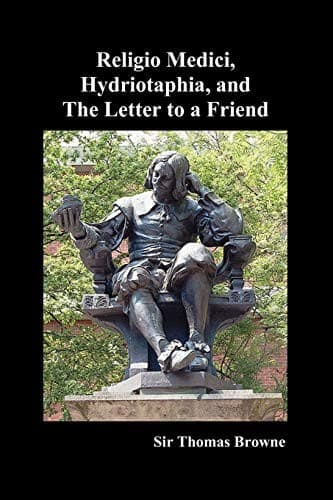
Religio Medici, Hydriotaphia, and the Letter to a FriendBrowne, Thomas, Sir
Religion
Religio Medici, Hydriotaphia, and the Letter to a Friend
Browne, Thomas, Sir
Christian ethics; Christian life; Essays; Funeral rites and ceremonies; Medical ethics; Medicine -- History; Religion and medicine
In this deliberate and creeping progress unto the grave, he was
somewhat too young and of too noble a mind, to fall upon that stupid
symptom observable in divers persons near their journey’s end, and
which may be reckoned among the mortal symptoms of their last disease;
that is, to become more narrow-minded, miserable, and tenacious,
unready to part with anything, when they are ready to part with
all, and afraid to want when they have no time to spend; meanwhile
physicians, who know that many are mad but in a single depraved
imagination, and one prevalent decipiency; and that beside and out of
such single deliriums a man may meet with sober actions and good sense
in bedlam; cannot but smile to see the heirs and concerned relations
gratulating themselves on the sober departure of their friends; and
though they behold such mad covetous passages, content to think they
die in good understanding, and in their sober senses.
Avarice, which is not only infidelity, but idolatry, either from
covetous progeny or questuary[120] education, had no root in his
breast, who made good works the expression of his faith, and was big
with desires unto public and lasting charities; and surely where
good wishes and charitable intentions exceed abilities, theorical
beneficency may be more than a dream. They build not castles in the
air who would build churches on earth; and though they leave no such
structures here, may lay good foundations in heaven. In brief, his
life and death were such, that I could not blame them who wished the
like, and almost to have been himself; almost, I say; for though we
may wish the prosperous appurtenances of others, or to be another in
his happy accidents, yet so intrinsical is every man unto himself,
that some doubt may be made, whether any would exchange his being, or
substantially become another man.
He had wisely seen the world at home and abroad, and thereby observed
under what variety men are deluded in the pursuit of that which is not
here to be found. And although he had no opinion of reputed felicities
below, and apprehended men widely out in the estimate of such
happiness, yet his sober contempt of the world wrought no Democratism
or Cynicism, no laughing or snarling at it, as well understanding
there are not felicities in this world to satisfy a serious mind; and
therefore, to soften the stream of our lives, we are fain to take in
the reputed contentations of this world, to unite with the crowd in
their beatitudes, and to make ourselves happy by consortion, opinion,
and co-existimation; for strictly to separate from received and
customary felicities, and to confine unto the rigour of realities,
were to contract the consolation of our beings unto too uncomfortable
circumscriptions.
Public-domain text, read in full here on John Shaqi.
Reviews
Reviews
No reviews yet
Be the first to share your thoughts on this work.
Elsewhere in the archive
Join the Discussion
Join the discussion
Sign in to leave a comment or review.
Sign InorCreate an account