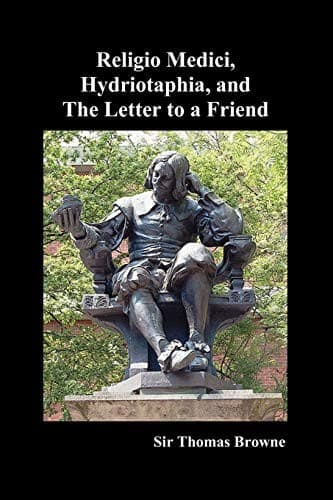
Religio Medici, Hydriotaphia, and the Letter to a Friend — John Shaqi
Religio Medici, Hydriotaphia, and the Letter to a FriendBrowne, Thomas, Sir
Religion
Religio Medici, Hydriotaphia, and the Letter to a Friend
Browne, Thomas, Sir
Christian ethics; Christian life; Essays; Funeral rites and ceremonies; Medical ethics; Medicine -- History; Religion and medicine
SECT. 1.--For my religion, though there be several circumstances that
might persuade the world I have none at all,--as the general scandal of
my profession,[1]--the natural course of my studies,--the indifferency
of my behaviour and discourse in matters of religion (neither violently
defending one, nor with that common ardour and contention opposing
another),--yet, in despite hereof, I dare without usurpation assume
the honourable style of a Christian. Not that I merely owe this title
to the font, my education, or the clime wherein I was born, as being
bred up either to confirm those principles my parents instilled into my
understanding, or by a general consent proceed in the religion of my
country; but having, in my riper years and confirmed judgment, seen and
examined all, I find myself obliged, by the principles of grace, and
the law of mine own reason, to embrace no other name but this. Neither
doth herein my zeal so far make me forget the general charity I owe
unto humanity, as rather to hate than pity Turks, Infidels, and (what
is worse) Jews; rather contenting myself to enjoy that happy style,
than maligning those who refuse so glorious a title.
_Sect._ 2.--But, because the name of a Christian is become too general
to express our faith,--there being a geography of religion as well
as lands, and every clime distinguished not only by their laws and
limits, but circumscribed by their doctrines and rules of faith,--to
be particular, I am of that reformed new-cast religion, wherein I
dislike nothing but the name; of the same belief our Saviour taught,
the apostles disseminated, the fathers authorized, and the martyrs
confirmed; but, by the sinister ends of princes, the ambition and
avarice of prelates, and the fatal corruption of times, so decayed,
impaired, and fallen from its native beauty, that it required the
careful and charitable hands of these times to restore it to its
primitive integrity. Now, the accidental occasion whereupon, the
slender means whereby, the low and abject condition of the person
by whom, so good a work was set on foot, which in our adversaries
beget contempt and scorn, fills me with wonder, and is the very same
objection the insolent pagans first cast at Christ and his disciples.
Public-domain text, read in full here on John Shaqi.
Reviews
Reviews
No reviews yet
Be the first to share your thoughts on this work.
Join the Discussion
Join the discussion
Sign in to leave a comment or review.
Sign InorCreate an account