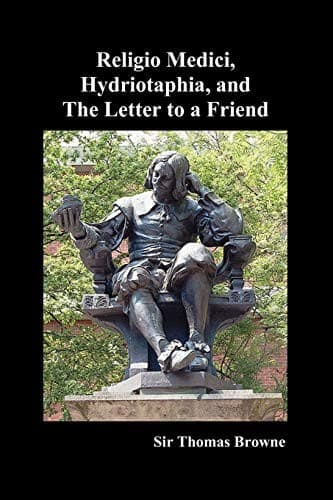
Religio Medici, Hydriotaphia, and the Letter to a FriendBrowne, Thomas, Sir
Religion
Religio Medici, Hydriotaphia, and the Letter to a Friend
Browne, Thomas, Sir
Christian ethics; Christian life; Essays; Funeral rites and ceremonies; Medical ethics; Medicine -- History; Religion and medicine
We cannot but wish these urns might have the effect of theatrical
vessels and great Hippodrome urns[X] in Rome, to resound the
acclamations and honour due unto you. But these are sad and sepulchral
pitchers, which have no joyful voices; silently expressing old
mortality, the ruins of forgotten times, and can only speak with life,
how long in this corruptible frame some parts may be uncorrupted; yet
able to outlast bones long unborn, and noblest pile among us.
[X] The great urns at the Hippodrome at Rome, conceived to resound the
voices of people at their shows.
We present not these as any strange sight or spectacle unknown to your
eyes, who have beheld the best of urns and noblest variety of ashes;
who are yourself no slender master of antiquities, and can daily
command the view of so many imperial faces; which raiseth your thoughts
unto old things and consideration of times before you, when even living
men were antiquities; when the living might exceed the dead, and to
depart this world could not be properly said to go unto the greater
number.[Y] And so run up your thoughts upon the ancient of days, the
antiquary’s truest object, unto whom the eldest parcels are young, and
earth itself an infant, and without Egyptian[Z] account makes but small
noise in thousands.
[Y] “Abiit ad plures.”
[Z] Which makes the world so many years old.
We were hinted by the occasion, not catched the opportunity to write
of old things, or intrude upon the antiquary. We are coldly drawn unto
discourses of antiquities, who have scarce time before us to comprehend
new things, or make out learned novelties. But seeing they arose, as
they lay almost in silence among us, at least in short account suddenly
passed over, we were very unwilling they should die again, and be
buried twice among us.
Beside, to preserve the living, and make the dead to live, to keep
men out of their urns, and discourse of human fragments in them, is
not impertinent unto our profession; whose study is life and death,
who daily behold examples of mortality, and of all men least need
artificial _mementos_, or coffins by our bedside, to mind us of our
graves.
’Tis time to observe occurrences, and let nothing remarkable escape us:
the supinity of elder days hath left so much in silence, or time hath
so martyred the records, that the most industrious heads do find no
easy work to erect a new Britannia.
’Tis opportune to look back upon old times, and contemplate our
forefathers. Great examples grow thin, and to be fetched from the
passed world. Simplicity flies away, and iniquity comes at long strides
upon us. We have enough to do to make up ourselves from present and
passed times, and the whole stage of things scarce serveth for our
instruction. A complete piece of virtue must be made from the Centos
of all ages, as all the beauties of Greece could make but one handsome
Venus.
Public-domain text, read in full here on John Shaqi.
Reviews
Reviews
No reviews yet
Be the first to share your thoughts on this work.
Elsewhere in the archive
Join the Discussion
Join the discussion
Sign in to leave a comment or review.
Sign InorCreate an account