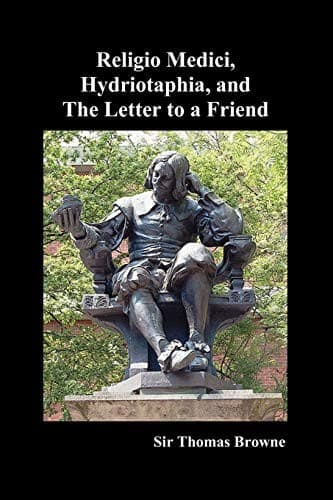
Religio Medici, Hydriotaphia, and the Letter to a FriendBrowne, Thomas, Sir
Religion
Religio Medici, Hydriotaphia, and the Letter to a Friend
Browne, Thomas, Sir
Christian ethics; Christian life; Essays; Funeral rites and ceremonies; Medical ethics; Medicine -- History; Religion and medicine
Cornelius Sylla was not the first whose body was burned in Rome, but
the first of the Cornelian family; which being indifferently, not
frequently used before; from that time spread, and became the prevalent
practice. Not totally pursued in the highest run of cremation; for
when even crows were funerally burnt, Poppæa the wife of Nero found a
peculiar grave interment. Now as all customs were founded upon some
bottom of reason, so there wanted not grounds for this; according
to several apprehensions of the most rational dissolution. Some
being of the opinion of Thales, that water was the original of all
things, thought it most equal[103] to submit unto the principle of
putrefaction, and conclude in a moist relentment.[104] Others conceived
it most natural to end in fire, as due unto the master principle in the
composition, according to the doctrine of Heraclitus; and therefore
heaped up large piles, more actively to waft them toward that element,
whereby they also declined a visible degeneration into worms, and left
a lasting parcel of their composition.
Some apprehended a purifying virtue in fire, refining the grosser
commixture, and firing out the æthereal particles so deeply immersed
in it. And such as by tradition or rational conjecture held any hint
of the final pyre of all things; or that this element at last must be
too hard for all the rest; might conceive most naturally of the fiery
dissolution. Others pretending no natural grounds, politickly declined
the malice of enemies upon their buried bodies. Which consideration led
Sylla unto this practice; who having thus served the body of Marius,
could not but fear a retaliation upon his own; entertained after in the
civil wars, and revengeful contentions of Rome.
But as many nations embraced, and many left it indifferent, so others
too much affected, or strictly declined this practice. The Indian
Brachmans seemed too great friends unto fire, who burnt themselves
alive and thought it the noblest way to end their days in fire;
according to the expression of the Indian, burning himself at Athens,
in his last words upon the pyre unto the amazed spectators, “thus I
make myself immortal.”[AG]
[AG] And therefore the inscription on his tomb was made accordingly,
“Hic Damase.”
But the Chaldeans, the great idolaters of fire, abhorred the burning of
their carcases, as a pollution of that deity. The Persian magi declined
it upon the like scruples, and being only solicitous about their bones,
exposed their flesh to the prey of birds and dogs. And the Persees now
in India, which expose their bodies unto vultures, and endure not so
much as _feretra_ or biers of wood, the proper fuel of fire, are led on
with such niceties. But whether the ancient Germans, who burned their
dead, held any such fear to pollute their deity of Herthus, or the
earth, we have no authentic conjecture.
Public-domain text, read in full here on John Shaqi.
Reviews
Reviews
No reviews yet
Be the first to share your thoughts on this work.
Elsewhere in the archive
Join the Discussion
Join the discussion
Sign in to leave a comment or review.
Sign InorCreate an account