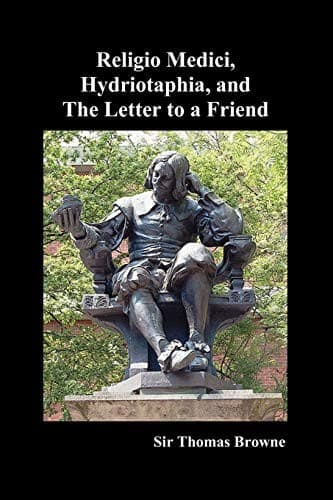
Religio Medici, Hydriotaphia, and the Letter to a FriendBrowne, Thomas, Sir
Religion
Religio Medici, Hydriotaphia, and the Letter to a Friend
Browne, Thomas, Sir
Christian ethics; Christian life; Essays; Funeral rites and ceremonies; Medical ethics; Medicine -- History; Religion and medicine
The Egyptians were afraid of fire, not as a deity, but a devouring
element, mercilessly consuming their bodies, and leaving too little
of them; and therefore by precious embalmments, depositure in dry
earths, or handsome inclosure in glasses, contrived the notablest ways
of integral conservation. And from such Egyptian scruples, imbibed by
Pythagoras, it may be conjectured that Numa and the Pythagorical sect
first waived the fiery solution.
The Scythians, who swore by wind and sword, that is, by life and
death, were so far from burning their bodies, that they declined all
interment, and made their graves in the air: and the Ichthyophagi, or
fish-eating nations about Egypt, affected the sea for their grave;
thereby declining visible corruption, and restoring the debt of their
bodies. Whereas the old heroes, in Homer, dreaded nothing more than
water or drowning; probably upon the old opinion of the fiery substance
of the soul, only extinguishable by that element; and therefore the
poet emphatically implieth[AH] the total destruction in this kind of
death, which happened to Ajax Oileus.
[AH] Which Magius reads ἐξαπόλωλε.
The old Balearians had a peculiar mode, for they used great urns and
much wood, but no fire in their burials, while they bruised the flesh
and bones of the dead, crowded them into urns, and laid heaps of wood
upon them. And the Chinese without cremation or urnal interment of
their bodies, make use of trees and much burning, while they plant a
pine-tree by their grave, and burn great numbers of printed draughts
of slaves and horses over it, civilly content with their companies in
_effigy_, which barbarous nations exact unto reality.
Christians abhorred this way of obsequies, and though they sticked
not to give their bodies to be burnt in their lives, detested that
mode after death: affecting rather a depositure than absumption, and
properly submitting unto the sentence of God, to return not unto
ashes but unto dust again, and conformable unto the practice of the
patriarchs, the interment of our Saviour, of Peter, Paul, and the
ancient martyrs. And so far at last declining promiscuous interment
with Pagans, that some have suffered ecclesiastical censures,[AI] for
making no scruple thereof.
[AI] Martialis the Bishop.
The Mussulman believers will never admit this fiery resolution. For
they hold a present trial from their black and white angels in the
grave; which they must have made so hollow, that they may rise upon
their knees.
Public-domain text, read in full here on John Shaqi.
Reviews
Reviews
No reviews yet
Be the first to share your thoughts on this work.
Elsewhere in the archive
Join the Discussion
Join the discussion
Sign in to leave a comment or review.
Sign InorCreate an account