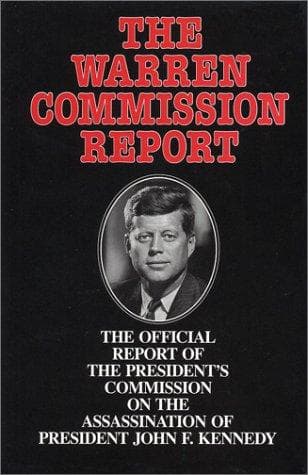
Report of the President's Commission on the Assassination of President John F. KennedyUnited States. Warren Commission
History
Report of the President's Commission on the Assassination of President John F. Kennedy
United States. Warren Commission
Kennedy, John F. (John Fitzgerald), 1917-1963 -- Assassination; Oswald, Lee Harvey
While appreciating the heavy and unique pressures with which the
Dallas Police Department was confronted by reason of the assassination
of President Kennedy, primary responsibility for having failed to
control the press and to check the flow of undigested evidence to the
public must be borne by the police department. It was the only agency
that could have established orderly and sound operating procedures to
control the multitude of newsmen gathered in the police building after
the assassination.
The Commission believes, however, that a part of the responsibility
for the unfortunate circumstances following the President’s death
must be borne by the news media. The crowd of newsmen generally
failed to respond properly to the demands of the police. Frequently
without permission, news representatives used police offices on the
third floor, tying up facilities and interfering with normal police
operations. Police efforts to preserve order and to clear passageways
in the corridor were usually unsuccessful. On Friday night the
reporters completely ignored Curry’s injunction against asking Oswald
questions in the assembly room and crowding in on him. On Sunday
morning, the newsmen were instructed to direct no questions at Oswald;
nevertheless, several reporters shouted questions at him when he
appeared in the basement.[C5-259]
Moreover, by constantly pursuing public officials, the news
representatives placed an insistent pressure, upon them to disclose
information. And this pressure was not without effect, since the police
attitude toward the press was affected by the desire to maintain
satisfactory relations with the news representatives and to create a
favorable image of themselves. Chief Curry frankly told the Commission
that
I didn’t order them out of the building, which if I had it
to do over I would. In the past like I say, we had always
maintained very good relations with our press, and they had
always respected us. * * * [C5-260]
Curry refused Fritz’ request to put Oswald behind the screen in the
assembly room at the Friday night press conference because this might
have hindered the taking of pictures.[C5-261] Curry’s subordinates had
the impression that an unannounced transfer of Oswald to the county
jail was unacceptable because Curry did not want to disappoint the
newsmen; he had promised that they could witness the transfer.[C5-262]
It seemed clear enough that any attempt to exclude the press from the
building or to place limits on the information disclosed to them would
have been resented and disputed by the newsmen, who were constantly and
aggressively demanding all possible information about anything related
to the assassination.
Public-domain text, read in full here on John Shaqi.
Reviews
Reviews
No reviews yet
Be the first to share your thoughts on this work.
Elsewhere in the archive
Join the Discussion
Join the discussion
Sign in to leave a comment or review.
Sign InorCreate an account