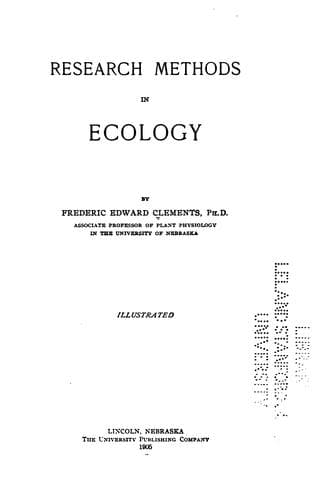
Research methods in ecologyClements, Frederic E. (Frederic Edward)
Science
Research methods in ecology
Clements, Frederic E. (Frederic Edward)
Plant ecology; Plant ecology -- Methodology
For these reasons, as will be pointed out in detail later, the
newer viewpoints are regarded as either the most important or the most
fundamental. Experimental ecology will throw a flood of light upon plant
structure and function, while exact methods of studying the habitat are
practically certain of universal application in the future.
PRESENT STATUS OF ECOLOGY
=10. The lack of special training.= The bane of the recent development
popularly known as ecology has been a widespread feeling that anyone can
do ecological work, regardless of preparation. There is nothing in
modern botany more erroneous than this feeling. The whole task of
ecology is to find out what the living plant and the living formation
are doing and have done in response to definite complexes of factors, i.
e., habitats. In this sense, ecology is practically coextensive with
botany, and the student of a local flora who knows a few hundred species
is no more competent to do ecological work than he is to reconstruct the
phylogeny of the vegetable kingdom, or to explain the transmission of
ancestral qualities. The comprehensive and fundamental character of the
subject makes a broad special training even more requisite than in more
restricted lines of botanical inquiry. The ecologist must first of all
be a botanist, not a mere cataloguer of plants, and he must also possess
a particular training in the special methods of ecological research. He
must be familiar with the various points of attack in this field, and he
must know the history of his subject thoroughly. Ecology affords the
most striking example of the prevalent evil of American botanical study,
i. e., an indifference to, or an ignorance of the literature of the
subject. The trouble is much aggravated here, however, by the breadth of
the field, and the common assumption that a special training is
unnecessary, if not, indeed, superfluous. Ignorance of the important
ecological literature has been a most fertile source of crude and
superficial studies, a condition that will become more apparent as these
fields are worked again by carefully trained investigators.
Public-domain text, read in full here on John Shaqi.
Reviews
Reviews
No reviews yet
Be the first to share your thoughts on this work.
Join the Discussion
Join the discussion
Sign in to leave a comment or review.
Sign InorCreate an account