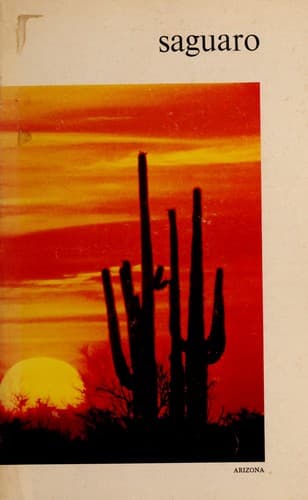
Desert ecology -- Arizona -- Saguaro National Park; Natural history -- Arizona -- Saguaro National Park
PRICKLYPEARS, like many of the chollas, produce large blossoms in late
spring. Those on the monument are principally the yellow-flowered
species. The reddish brown-to-mahogany colored edible fruits, called
tunas, attain the size of large strawberries. When mature in autumn,
they are consumed by many desert animals.
Some of the smaller cactuses are so tiny as to be unnoticeable except
when in bloom; examples are the HEDGEHOGS, the FISHHOOKS, and the
PINCUSHIONS. Blossoms of some of these ground-hugging species are large,
in some cases larger than the rest of the plant, and spectacular in form
and color. All add to the monument’s spring and early summer display of
floral beauty.
Non-Succulents
For the diversity of devices for adaptation to an inhospitable
environment, the many species making up the non-succulent desert
vegetation provide an absorbing field for study. As we have seen, there
are two ways to survive the harsh desert climate; one is to avoid the
periods of excessive heat and drought (“escapers”); the other is to
adopt various protective devices (“evaders” and “resisters”).
Short-lived plants follow the first method; perennials, the second.
_Perennials_
Chief among the requirements for year-round survival in the desert is a
plant’s ability to control transpiration and thus maintain a balance
between water loss and water supply. In this struggle, the hours of
darkness are a great aid because in the cool of the night the air is
unable to take up as much moisture as it does under the influence of the
sun’s evaporating heat. Therefore, less exhaling and evaporating of
water occurs from plants, and both the rate and the amount of water loss
are reduced. This reduction in transpiration at night allows the plants
to recover from the severe drying effects of the day. One biologist may
have been close to the truth when he stated, “If the celestial machinery
should break down so that just one night were omitted in the midst of a
dry season, it would spell the doom of half the nonsucculent plants in
the desert.”
Public-domain text, read in full here on John Shaqi.
Reviews
Reviews
No reviews yet
Be the first to share your thoughts on this work.
Join the Discussion
Join the discussion
Sign in to leave a comment or review.
Sign InorCreate an account