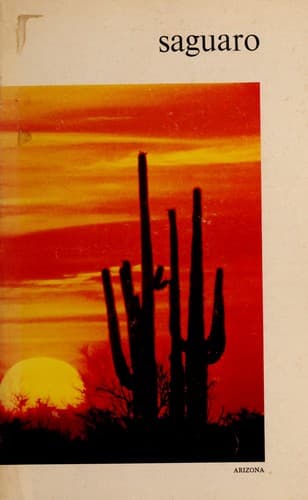
Desert ecology -- Arizona -- Saguaro National Park; Natural history -- Arizona -- Saguaro National Park
The RINGTAIL, a smaller relative of the raccoon, is somewhat similar in
habitat preference and nocturnal habits. Its flattened, bushy tail,
acting as a balancer, helps this short-legged, agile animal in leaping
from point to point on the steep rocky surfaces it seems to favor. It
sometimes takes up residence in little-used or abandoned buildings,
where small rodents, its principal source of food, are usually abundant.
About the size of a house cat, it has large eyes and ears and
alternating dark and light bands on its tail.
A tropical animal that seems to be extending its range northward, the
COATI (or coatimundi) is often seen in the forests of the Rincons. With
long snout and long, banded tail, it looks something like an elongated
raccoon, to which it too is related. These omnivorous animals travel in
bands, rooting among leaves for insects and whatever else they can find.
[Illustration: Coati, or coatimundi.]
[Illustration: Desert vegetation near Red Hill, Tucson Mountain
Section.]
the rhythms of nature
Natural landscapes may appear unchanging, but this is illusion. Within
the apparent constancy, daily and seasonal cycles, fluctuations in
numbers, and long-term change are the rule.
Daily cycles are obvious to those who are about at the edges of the day.
Take 24 summer hours in the cactus forest of Saguaro National Monument.
When the first light comes over the mountains, curve-billed thrashers
and cactus wrens sing noisily among the chollas. Other birds soon join
in. The early morning walker is likely to hear peccaries grunting in the
mesquites along a wash, or see mule deer staring at him, frozen like
statues before sudden flight to a sheltering thicket.
At midday, the scene is quiet. Nothing stirs under the baking sun except
perhaps a vulture, soaring on the hot air currents. The desert creatures
have not gone—they are in the shade of bushes or underground. Even some
of the plants are “taking a siesta,” having folded their leaves or
closed their leaf pores.
Soon after sundown the desert comes to life again. The birds give a
subdued version of their morning’s vocal performance. Tarantulas begin
their slow, stately walk over the ground searching for prey or mates.
Coyotes stretch and howl—a prelude to the evening’s hunt. As night
falls, rattlesnakes emerge from their cool retreats to search out
kangaroo rats, which in great numbers are scrutinizing the sand for
seeds. And through the night, creatures of many other kinds hunt food to
last them through another broiling day.
The rhythmic patterns of the daily cycle are paralleled on a larger
scale through the year—seasons of activity follow seasons of quiet. In
the desert, rain or lack of rain marks the changes, though gradually
rising or falling temperature adds its impact.
Public-domain text, read in full here on John Shaqi.
Reviews
Reviews
No reviews yet
Be the first to share your thoughts on this work.
Join the Discussion
Join the discussion
Sign in to leave a comment or review.
Sign InorCreate an account