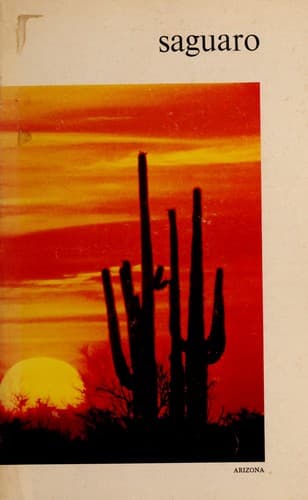
Desert ecology -- Arizona -- Saguaro National Park; Natural history -- Arizona -- Saguaro National Park
The gentle rains of winter prepare the way for the year’s greatest burst
of activity. By March, spring flowers are blooming and birds are
starting to nest. Snakes begin to come out of hibernation. April and May
see the apex of spring activity, as insects swarm around the flowering
plants, and birds take advantage of this proliferation of food to raise
their young. The desert now is yellow with the blossoms of paloverde,
mesquite, acacia, and brittlebush.
But April also marks the beginning of a drought that intensifies through
May and June, making these last 2 months the year’s parching crucible in
which reproductive ability is tested. If winter rains have been meager,
the heat and drought of May and June can kill all the young of many
birds. Some birds, such as Gambel’s quail, may not even attempt to nest
in a dry year. Conditions may be so harsh at this season that some
mammals, such as the pocket mouse, close up shop completely, sleeping
the days away underground.
Relief comes with the rains of July and August. Now the summer annuals
spring magically from the ground, perennials put forth new leaves, and
saguaros do all their growing for the year. This summer burst of plant
growth is accompanied by a new hatching of insects, which allows a few
more birds to nest, and along with the new vegetation supports a larger
pyramid of animal life generally. Among the new animals that reappear
are toads, which now emerge from their long sleep in the soil to mate
and lay eggs in the pools formed by summer rains.
When the last torrential rain of August or September falls, a new dip in
the yearly cycle of activity begins. This one is not so deep, not so
trying, as the drought of early summer, but it too is a time of relative
quiet. Roundtail squirrels go underground to sleep until cooler weather
comes. Now the migrating birds slip through, hardly noticed among the
mesquites and paloverdes. Butterflies lay their eggs, in preparation for
a new generation beyond the winter. Signaling the last phase in the
yearly cycle, wet canyons turn yellow and brown as cottonwoods, willows,
and sycamores present a pale version of the spectacular foliage displays
seen in the East.
Public-domain text, read in full here on John Shaqi.
Reviews
Reviews
No reviews yet
Be the first to share your thoughts on this work.
Join the Discussion
Join the discussion
Sign in to leave a comment or review.
Sign InorCreate an account