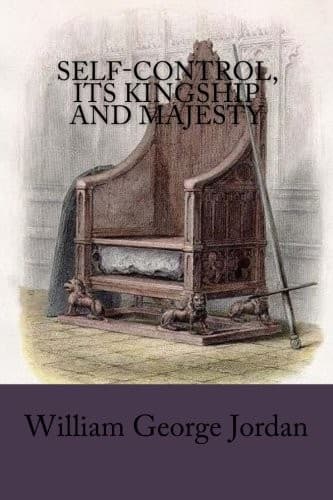
Self-Control, Its Kingship and MajestyJordan, William George
Philosophy
Self-Control, Its Kingship and Majesty
Jordan, William George
Conduct of life; Self-control
The man who looks back upon his past life and says, “I have nothing to
regret,” has lived in vain. The life without regret is the life without
gain. Regret is but the light of fuller wisdom, from our past,
illumining our future. It means that we are wiser to-day than we were
yesterday. This new wisdom means new responsibility, new privileges; it
is a new chance for a better life. But if regret remain merely “regret,”
it is useless; it must become the revelation of new possibilities, and
the inspiration and source of strength to realize them. Even omnipotence
could not change the past, but each man, to a degree far beyond his
knowing, holds his future in his own hands.
If man were sincere in his longing to live life over he would get more
help from his failures. If he realize his wasted golden hours of
opportunity, let him not waste other hours in useless regret, but seek
to forget his folly and to keep before him only the lessons of it. His
past extravagance of time should lead him to minify his loss by
marvellous economy of present moments. If his whole life be darkened by
the memory of a cruel wrong he has done another, if direct amends be
impossible to the injured one, passed from life, let him make the world
the legatee to receive his expressions of restitution. Let his regret
and sorrow be manifest in words of kindness and sympathy, and acts of
sweetness and love given to all with whom he comes in contact. If he
regrets a war he has made against one individual, let him place the
entire world on his pension list. If a man make a certain mistake once,
the only way he can properly express his recognition of it is not to
make a similar mistake later. Josh Billings once said: “A man who is
bitten twice by the same dog is better adapted to that business than any
other.”
There are many people in this world who want to live life over because
they take such pride in their past. They resemble the beggars in the
street who tell you they “have seen better days.” It is not what man
_was_ that shows character; it is what he progressively _is_. Trying to
obtain a present record on a dead past is like some present-day
mediocrity that tries to live on its ancestry. We look for the fruit in
the branches of the family tree, not in the roots. Showing how a family
degenerated from a noble ancestor of generations ago to its present
representative is not a boast;—it is an unnecessary confession. Let man
think less of his own ancestors and more of those he is preparing for
his posterity; less of his past virtue, and more of his future.
Public-domain text, read in full here on John Shaqi.
Reviews
Reviews
No reviews yet
Be the first to share your thoughts on this work.
Join the Discussion
Join the discussion
Sign in to leave a comment or review.
Sign InorCreate an account