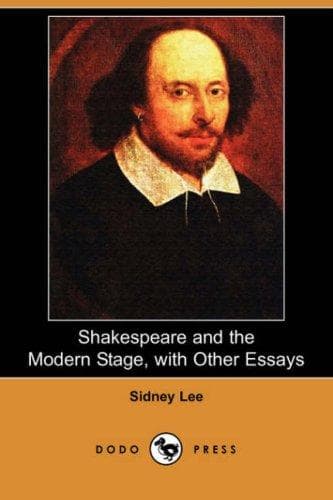
Shakespeare and the Modern Stage; with Other EssaysLee, Sidney, Sir
History
Shakespeare and the Modern Stage; with Other Essays
Lee, Sidney, Sir
Shakespeare, William, 1564-1616; Shakespeare, William, 1564-1616 -- Stage history
O for a muse of fire, that would ascend
The brightest heaven of invention,
A kingdom for a stage, princes to act,
And monarchs to behold the swelling scene!
Then should the warlike Harry, like himself,
Assume the port of Mars; and at his heels,
Leash'd in like hounds, should famine, sword and fire
Crouch for employment. But pardon, gentles all,
The flat unraised spirits that have dar'd
On this unworthy scaffold to bring forth
So great an object: can this cockpit hold
The vasty fields of France? or may we cram
Within this wooden O the very casques
That did affright the air at Agincourt?
O, pardon! since a crooked figure may
Attest in little place a million;
And let us, ciphers to this great accompt,
On your imaginary forces work.
Suppose within the girdle of these walls
Are now confined two mighty monarchies,
Whose high upreared and abutting fronts,
The perilous narrow ocean parts asunder;
Piece out our imperfections with your thoughts;
Into a thousand parts divide one man,
And make imaginary puissance:
Think, when we talk of horses, that you see them
Printing their proud hoofs i' the receiving earth.
For 'tis your thoughts that now must deck our kings,
Carry them here and there, jumping o'er times,
Turning the accomplishment of many years
Into an hour glass.
There is, in my opinion, no strict relevance in these lines to the
enquiry whether Shakespeare's work should be treated on the stage as
drama or spectacle. Nay, I go further, and assert that, as far as the
speech touches the question at issue at all, it tells against the
pretensions of spectacle.
Public-domain text, read in full here on John Shaqi.
Reviews
Reviews
No reviews yet
Be the first to share your thoughts on this work.
Join the Discussion
Join the discussion
Sign in to leave a comment or review.
Sign InorCreate an account