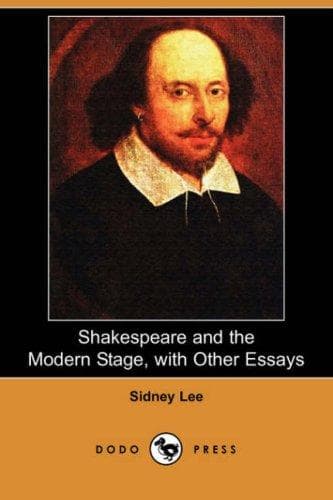
Shakespeare and the Modern Stage; with Other EssaysLee, Sidney, Sir
History
Shakespeare and the Modern Stage; with Other Essays
Lee, Sidney, Sir
Shakespeare, William, 1564-1616; Shakespeare, William, 1564-1616 -- Stage history
Thus the charge sometimes brought against the Elizabethan playgoer of
failing to recognise Shakespeare's sovereign genius should be reckoned
among popular errors. It was not merely the recognition of the
critical and highly educated that Shakespeare received in person. It
was by the voice of the half-educated populace, whose heart and
intellect were for once in the right, that he was acclaimed the
greatest interpreter of human nature that literature had known, and,
as subsequent experience has proved, was likely to know. There is
evidence that throughout his lifetime and for a generation afterwards
his plays drew crowds to pit, boxes, and gallery alike. It is true
that he was one of a number of popular dramatists, many of whom had
rare gifts, and all of whom glowed with a spark of the genuine
literary fire. But Shakespeare was the sun in the firmament: when his
light shone, the fires of all contemporaries paled in the contemporary
playgoer's eye. There is forcible and humorous portrayal of human
frailty and eccentricity in plays of Shakespeare's contemporary, Ben
Jonson. Ben Jonson was a classical scholar, which Shakespeare was not.
Jonson was as well versed in Roman history as a college tutor. But
when Shakespeare and Ben Jonson both tried their hands at dramatising
episodes in Roman history, the Elizabethan public of all degrees of
intelligence welcomed Shakespeare's efforts with an enthusiasm which
they rigidly withheld from Ben Jonson's. This is how an ordinary
playgoer contrasted the reception of Jonson's Roman play of
_Catiline's Conspiracy_ with that of Shakespeare's Roman play of
_Julius Caesar_:--
So have I seen when Caesar would appear,
And on the stage at half-sword parley were
Brutus and Cassius--oh! how the audience
Were ravished, with what wonder they went thence;
When some new day they would not brook a line
Of tedious though well-laboured Catiline.
Shakespeare was the popular favourite. It is rare that the artist who
is a hero with the multitude is also a hero with the cultivated few.
But Shakespeare's universality of appeal was such as to include among
his worshippers from the first the trained and the untrained playgoer
of his time.
IV
Public-domain text, read in full here on John Shaqi.
Reviews
Reviews
No reviews yet
Be the first to share your thoughts on this work.
Join the Discussion
Join the discussion
Sign in to leave a comment or review.
Sign InorCreate an account