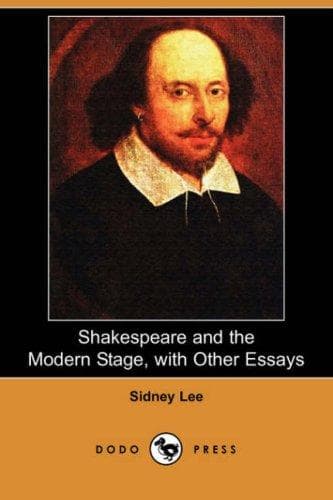
Shakespeare and the Modern Stage; with Other Essays — John Shaqi
Shakespeare and the Modern Stage; with Other EssaysLee, Sidney, Sir
History
Shakespeare and the Modern Stage; with Other Essays
Lee, Sidney, Sir
Shakespeare, William, 1564-1616; Shakespeare, William, 1564-1616 -- Stage history
To the Elizabethan actor a warm tribute is due. Shakespeare has
declared with emphasis that no amount of scenery can secure genuine
success on the stage for a great work of the imagination. He is no
less emphatic in the value he sets on competent acting. In _Hamlet_,
as every reader will remember, the dramatist points out the perennial
defects of the actor, and shows how they may and must be corrected. He
did all he could for the Elizabethan playgoer in the way of insisting
that the art of acting must be studied seriously, and that the
dramatist's words must reach the ears of the audience, clearly and
intelligibly enunciated.
"Speak the speech, I pray you," he tells the actor, "as I pronounce it
to you, trippingly on the tongue; but if you mouth it, as many of your
players do, I had as lief the town-crier spoke my lines. Nor do not
saw the air too much with your hand, thus; but use all gently: for in
the very torrent, tempest, and--as I may say--whirlwind of passion,
you must acquire and beget a temperance, that may give it smoothness.
"Be not too tame neither, but let your own discretion be your tutor:
suit the action to the word, the word to the action; with this special
observance, that you o'erstep not the modesty of nature. O! there be
players that I have seen play, and heard others praise, and that
highly, not to speak it profanely, that, neither having the accent of
Christians nor the gait of Christian, pagan, nor man, have so strutted
and bellowed that I have thought some of nature's journeymen had made
men and not made them well, they imitated humanity so abominably."
The player amiably responds: "I hope we have reformed that
indifferently with us." Shakespeare in the person of Hamlet retorts in
a tone of some impatience: "O! reform it altogether. And let those
that play your clowns speak no more than is set down for them." The
applause which welcomed Shakespeare's masterpieces on their first
representation is adequate evidence that the leading Elizabethan
actors in the main obeyed these instructions.
VIII
Nevertheless the final success of a great imaginative play on the
stage does not depend entirely on the competence of the actor.
Encircling and determining all conditions is the fitness of the
audience. A great imaginative play well acted will not achieve genuine
success unless the audience has at command sufficient imaginative
power to induce in them an active sympathy with the efforts, not only
of the actor, but of the dramatist.
Public-domain text, read in full here on John Shaqi.
Reviews
Reviews
No reviews yet
Be the first to share your thoughts on this work.
Join the Discussion
Join the discussion
Sign in to leave a comment or review.
Sign InorCreate an account