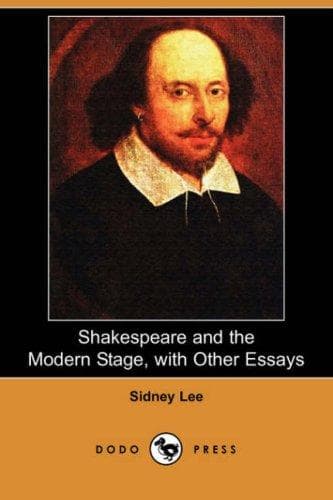
Shakespeare and the Modern Stage; with Other EssaysLee, Sidney, Sir
History
Shakespeare and the Modern Stage; with Other Essays
Lee, Sidney, Sir
Shakespeare, William, 1564-1616; Shakespeare, William, 1564-1616 -- Stage history
Profound commiseration seems due to the Elizabethan playgoer, who was
liable to have his faith in the tenderness and gentleness of Desdemona
rudely shaken by the irruption on the stage of a brawny,
broad-shouldered athlete, masquerading in her sweet name. Boys or men
of all shapes and sizes squeaking or bawling out the tender and
pathetic lines of Shakespeare's heroines, and no joys of scenery to
distract the playgoer from the uncouth inconsistency! At first sight
it would seem that the Elizabethan playgoer's lot was anything but
happy.
VII
The Elizabethan's hard fate strangely contrasts with the situation of
the playgoer of the nineteenth or twentieth century. To the latter
Shakespeare is presented in a dazzling plenitude of colour. Music
punctuates not merely intervals between scenes and acts, but critical
pauses in the speeches of the actors. Pictorial tableaux enthral the
most callous onlooker. Very striking is the contrast offered by the
methods of representation accepted with enthusiasm by the Elizabethan
playgoer and those deemed essential by the fashionable modern manager.
There seems a relish of barbarism in the ancient system when it is
compared with the one now in vogue.
I fear the final conclusion to be drawn from the contrast is, contrary
to expectation, more creditable to our ancestors than to ourselves.
The needful dramatic illusion was obviously evoked in the playgoer of
the past with an ease that is unknown to the present patrons of the
stage. The absence of scenery, the substitution of boys and men for
women, could only have passed muster with the Elizabethan spectator
because he was able to realise the dramatic potency of the poet's work
without any, or any but the slightest, adventitious aid outside the
words of the play.
The Elizabethan playgoer needs no pity. It is ourselves who are
deserving objects of compassion, because we lack those qualities, the
possession of which enabled the Elizabethan to acknowledge in
Shakespeare's work, despite its manner of production, "the delight and
wonder of his stage." The imaginative faculty was far from universal
among the Elizabethan playgoers. The playgoing mob always includes
groundlings who delight exclusively in dumb shows and noise. Many of
Shakespeare's contemporaries complained that there were playgoers who
approved nothing "but puppetry and loved ridiculous antics," and that
there were men who, going to the playhouse only "to laugh and feed
fool-fat," "checked at all goodness there."[7] No public of any age or
country is altogether free from such infirmities. But the reception
accorded to Shakespeare's plays in the theatre of his day, in
contemporary theatrical conditions, is proof-positive of a signal
imaginative faculty in an exceptionally large proportion of the
playgoers.
[Footnote 7: Chapman's _Revenge of Bussy D'Ambois_, Act I., Sc. i.]
Public-domain text, read in full here on John Shaqi.
Reviews
Reviews
No reviews yet
Be the first to share your thoughts on this work.
Join the Discussion
Join the discussion
Sign in to leave a comment or review.
Sign InorCreate an account