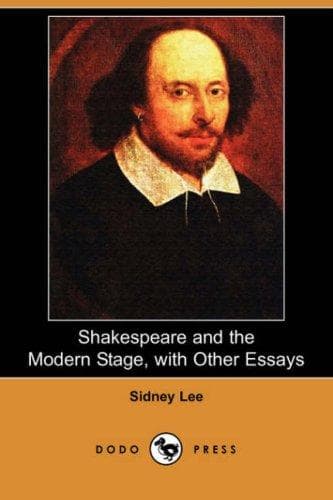
Shakespeare and the Modern Stage; with Other EssaysLee, Sidney, Sir
History
Shakespeare and the Modern Stage; with Other Essays
Lee, Sidney, Sir
Shakespeare, William, 1564-1616; Shakespeare, William, 1564-1616 -- Stage history
The literary critic knows well enough that the merit of these three
pieces--_A Midsummer Night's Dream_, _Twelfth Night_, and _Romeo and
Juliet_--mainly lies in their varied wealth of poetic imagery and
passion. One thing alone could render the words, in which poetic
genius finds voice, tolerable in the playhouse to a spectator of
Pepys's prosaic temperament. The one thing needful is inspired acting,
and in the case of these three plays, when Pepys saw them performed,
inspired acting was wanting.
It is at first sight disconcerting to find Pepys no less impatient of
_The Merry Wives of Windsor_. He expresses a mild interest in the
humours of "the country gentleman and the French doctor." But he
condemns the play as a whole. It is in his favour that his bitterest
reproaches are aimed at the actors and actresses. One can hardly
conceive that Falstaff, fitly interpreted, would have failed to
satisfy Pepys's taste in humour, commonplace though it was. He is not
quite explicit on the point; but there are signs that the histrionic
interpretation of Shakespeare's colossal humorist, rather than the
dramatist's portrayal of the character, caused the diarist's
disappointment.
Just before Pepys saw the first part of _Henry IV._, wherein Falstaff
figures to supreme advantage, he had bought and read the play in
quarto. "But my expectation being too great" (he avers), "it did not
please me as otherwise I believe it would." Here it seems clear that
his hopes of the actor were unfulfilled. However, he saw _Henry IV._
again a few months later, and had the grace to describe it as "a good
play." On a third occasion he wrote that, "contrary to expectation,"
he was pleased by the delivery of Falstaff's ironical speech about
honour. For whatever reason, Pepys's affection for Shakespeare's fat
knight, as he figured on the stage of his day, never touched the note
of exaltation.
Of Shakespeare's great tragedies Pepys saw three--_Othello_, _Hamlet_,
and _Macbeth_. But in considering his several impressions of these
pieces, we have to make an important proviso. Only the first two of
them did he witness in the authentic version. _Macbeth_ underwent in
his day a most liberal transformation, which carried it far from its
primordial purity. The impressions he finally formed of _Othello_ and
_Hamlet_ are not consistent one with the other, but are eminently
characteristic of the variable moods of the average playgoer.
Public-domain text, read in full here on John Shaqi.
Reviews
Reviews
No reviews yet
Be the first to share your thoughts on this work.
Elsewhere in the archive
Join the Discussion
Join the discussion
Sign in to leave a comment or review.
Sign InorCreate an account