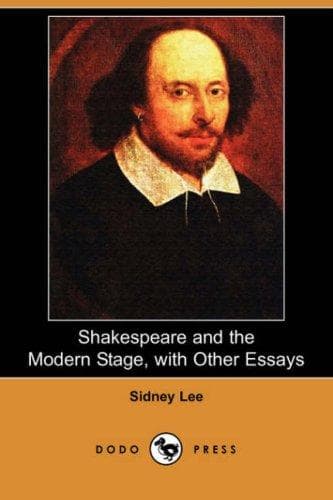
Shakespeare and the Modern Stage; with Other EssaysLee, Sidney, Sir
History
Shakespeare and the Modern Stage; with Other Essays
Lee, Sidney, Sir
Shakespeare, William, 1564-1616; Shakespeare, William, 1564-1616 -- Stage history
There is little reason to doubt that the plays of Shakespeare which I
have enumerated were all seen by Pepys in authentic shapes. Betterton
acted Lear, we are positively informed, "exactly as Shakespeare wrote
it"; and at the dates when Pepys saw _Hamlet_, _Twelfth Night_, and
the rest, there is no evidence that the old texts had been tampered
with. The rage for adapting Shakespeare to current theatrical
requirements reached its full tide after the period of Pepys's diary.
Pepys witnessed only the first-fruits of that fantastic movement. It
acquired its greatest luxuriance later. The pioneer of the great
scheme of adaptation was Sir William D'Avenant, and he was aided in
Pepys's playgoing days by no less a personage than Dryden. It was
during the succeeding decade that the scandal, fanned by the energies
of lesser men, was at its unseemly height.
No disrespect seems to have been intended to Shakespeare's memory by
those who devoted themselves to these acts of vandalism. However
difficult it may be to realise the fact, true admiration for
Shakespeare's genius seems to have flourished in the breasts of all
the adapters, great and small. D'Avenant, whose earliest poetic
production was a pathetic elegy on the mighty dramatist, never ceased
to write or speak of him with the most affectionate respect. Dryden,
who was first taught by D'Avenant "to admire" Shakespeare's work,
attests in his critical writings a reverence for its unique
excellence, which must satisfy the most enthusiastic worshipper. The
same temper characterises references to Shakespeare on the part of
dramatists of the Restoration, who brought to the adaptation of
Shakespeare abilities of an order far inferior to those of Dryden or
of D'Avenant. Nahum Tate, one of the least respected names in English
literature, was one of the freest adapters of Shakespearean drama to
the depraved taste of the day. Yet even he assigned to the master
playwright unrivalled insight into the darkest mysteries of human
nature, and an absolute mastery of the faculty of accurate
characterisation. For once, Tate's literary judgment must go
unquestioned.
It was no feeling of disrespect or of dislike for Shakespeare's
work--it was the change that was taking place in the methods of
theatrical representation, which mainly incited the Shakespearean
adapters of the Restoration to their benighted labours. Shakespeare
had been acted without scenery or musical accompaniment. As soon as
scenic machinery and music had become ordinary accessories of the
stage, it seemed to theatrical managers almost a point of honour to
fit Shakespearean drama to the new conditions. To abandon him
altogether was sacrilege. Yet the mutation of public taste offered, as
the only alternative to his abandonment, the obligation of bestowing
on his work every mechanical advantage, every tawdry ornament in the
latest mode.
Public-domain text, read in full here on John Shaqi.
Reviews
Reviews
No reviews yet
Be the first to share your thoughts on this work.
Elsewhere in the archive
Join the Discussion
Join the discussion
Sign in to leave a comment or review.
Sign InorCreate an account