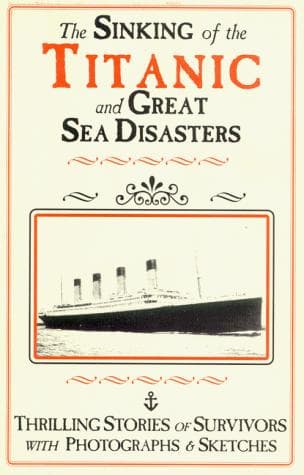
Shipwrecks -- North Atlantic Ocean; Titanic (Steamship)
All the plating of the hulls was riveted by hydraulic power, driving
seven-ton riveting machines, suspended from traveling cranes. The double
bottom extended the full length of the vessel, varying from 5 feet 3
inches to 6 feet 3 inches in depth, and lent added strength to the hull.
MOST LUXURIOUS STEAMSHIP
Not only was the Titanic the largest steamship afloat but it was the
most luxurious. Elaborately furnished cabins opened onto her eleven
decks, and some of these decks were reserved as private promenades that
were engaged with the best suites. One of these suites was sold for
$4350 for the boat's maiden and only voyage. Suites similar, but which
were without the private promenade decks, sold for $2300.
The Titanic differed in some respects from her sister ship. The Olympic
has a lower promenade deck, but in the Titanic's case the staterooms
were brought out flush with the outside of the superstructure, and the
rooms themselves made much larger. The sitting rooms of some of the
suites on this deck were 15 x 15 feet.
The restaurant was much larger than that of the Olympic and it had a
novelty in the shape of a private promenade deck on the starboard side,
to be used exclusively by its patrons. Adjoining it was a reception
room, where hosts and hostesses could meet their guests.
Two private promenades were connected with the two most luxurious suites
on the ship. The suites were situated about amidships, one on either
side of the vessel, and each was about fifty feet long. One of the
suites comprised a sitting room, two bedrooms and a bath.
These private promenades were expensive luxuries. The cost figured out
something like forty dollars a front foot for a six days' voyage. They,
with the suites to which they are attached, were the most expensive
transatlantic accommodations yet offered.
THE ENGINE ROOM
The engine room was divided into two sections, one given to the
reciprocating engines and the other to the turbines. There were two
sets of the reciprocating kind, one working each of the wing propellers
through a four-cylinder triple expansion, direct acting inverted engine.
Each set could generate 15,000 indicated horse-power at seventy-five
revolutions a minute. The Parsons type turbine takes steam from the
reciprocating engines, and by developing a horse-power of 16,000 at 165
revolutions a minute works the third of the ship's propellers, the one
directly under the rudder. Of the four funnels of the vessel three
were connected with the engine room, and the fourth or after funnel for
ventilating the ship including the gallery.
Public-domain text, read in full here on John Shaqi.
Reviews
Reviews
No reviews yet
Be the first to share your thoughts on this work.
Join the Discussion
Join the discussion
Sign in to leave a comment or review.
Sign InorCreate an account