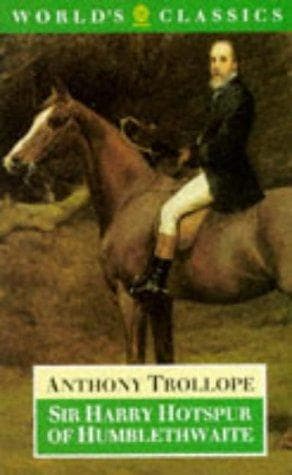
Sir Harry Hotspur of HumblethwaiteTrollope, Anthony
General
Sir Harry Hotspur of Humblethwaite
Trollope, Anthony
Cumberland (England) -- Fiction; Domestic fiction; Fathers and daughters -- Fiction; Inheritance and succession -- Fiction
Blackness in a male sheep in regard to the other sin is venial
blackness. Whether the teller of such a tale as this should say so
outright, may be matter of dispute; but, unless he say so, the teller
of this tale does not know how to tell his tale truly. Blackness such
as that will be all condoned, and the sheep received into almost any
flock, on condition, not of repentance or humiliation or confession,
but simply of change of practice. The change of practice in certain
circumstances and at a certain period becomes expedient; and if it be
made, as regards tints in the wool of that nature, the sheep becomes
as white as he is needed to be. In this respect our sheep had been as
black as any sheep, and at this present period of his life had need
of much change before he would be fit for any decent social herding.
And then there are the shades of black which come from
conviviality,--which we may call table blackness,--as to which there
is an opinion constantly disseminated by the moral newspapers of
the day, that there has come to be altogether an end of any such
blackness among sheep who are gentlemen. To make up for this, indeed,
there has been expressed by the piquant newspapers of the day an
opinion that ladies are taking up the game which gentlemen no longer
care to play. It may be doubted whether either expression has in
it much of truth. We do not see ladies drunk, certainly, and we do
not see gentlemen tumbling about as they used to do, because their
fashion of drinking is not that of their grandfathers. But the love
of wine has not gone out from among men; and men now are as prone
as ever to indulge their loves. Our black sheep was very fond of
wine,--and also of brandy, though he was wolf enough to hide his
taste when occasion required it.
Very early in life he had come from France to live in England, and
had been placed in a cavalry regiment, which had, unfortunately for
him, been quartered either in London or its vicinity. And, perhaps
equally unfortunate for him, he had in his own possession a small
fortune of some £500 a year. This had not come to him from his
father; and when his father had died in Paris, about two years before
the date of our story, he had received no accession of regular
income. Some couple of thousand of pounds had reached his hands
from his father's effects, which had helped him through some of the
immediately pressing difficulties of the day,--for his own income at
that time had been altogether dissipated. And now he had received a
much larger sum from his cousin, with an assurance, however, that the
family property would not become his when he succeeded to the family
title. He was so penniless at the time, so prone to live from hand to
mouth, so little given to consideration of the future, that it may be
doubted whether the sum given to him was not compensation in full for
all that was to be withheld from him.
Public-domain text, read in full here on John Shaqi.
Reviews
Reviews
No reviews yet
Be the first to share your thoughts on this work.
Join the Discussion
Join the discussion
Sign in to leave a comment or review.
Sign InorCreate an account