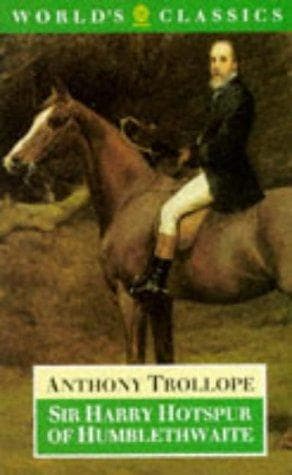
Sir Harry Hotspur of HumblethwaiteTrollope, Anthony
General
Sir Harry Hotspur of Humblethwaite
Trollope, Anthony
Cumberland (England) -- Fiction; Domestic fiction; Fathers and daughters -- Fiction; Inheritance and succession -- Fiction
Still there was his chance with the heiress! In regarding this
chance, he had very soon determined that he would marry his cousin
if it might be within his power to do so. He knew, and fully
appreciated, his own advantages. He was a handsome man,--tall for a
Hotspur, but with the Hotspur fair hair and blue eyes, and well-cut
features. There lacked, however, to him, that peculiar aspect of
firmness about the temples which so strongly marked the countenance
of Sir Harry and his daughter; and there had come upon him a _blasé_
look, and certain outer signs of a bad life, which, however, did not
mar his beauty, nor were they always apparent. The eye was not always
bloodshot, nor was the hand constantly seen to shake. It may be said
of him, both as to his moral and physical position, that he was on
the edge of the precipice of degradation, but that there was yet a
possibility of salvation.
He was living in a bachelor's set of rooms, at this time, in St.
James's Street, for which, it must be presumed, that ready money was
required. During the last winter he had horses in Northamptonshire,
for the hire of which, it must be feared, that his prospects as heir
to Humblethwaite had in some degree been pawned. At the present time
he had a horse for Park riding, and he looked upon a good dinner,
with good wine, as being due to him every day, as thoroughly as
though he earned it. That he had never attempted to earn a shilling
since the day on which he had ceased to be a soldier, now four years
since, the reader will hardly require to be informed.
In spite of all his faults, this man enjoyed a certain social
popularity for which many a rich man would have given a third of his
income. Dukes and duchesses were fond of him; and certain persons,
standing very high in the world, did not think certain parties were
perfect without him. He knew how to talk enough, and yet not to talk
too much. No one could say of him that he was witty, well-read, or
given to much thinking; but he knew just what was wanted at this
point of time or at that, and could give it. He could put himself
forward, and could keep himself in the background. He could shoot
well without wanting to shoot best. He could fetch and carry, but
still do it always with an air of manly independence. He could
subserve without an air of cringing. And then he looked like a
gentleman.
Public-domain text, read in full here on John Shaqi.
Reviews
Reviews
No reviews yet
Be the first to share your thoughts on this work.
Join the Discussion
Join the discussion
Sign in to leave a comment or review.
Sign InorCreate an account