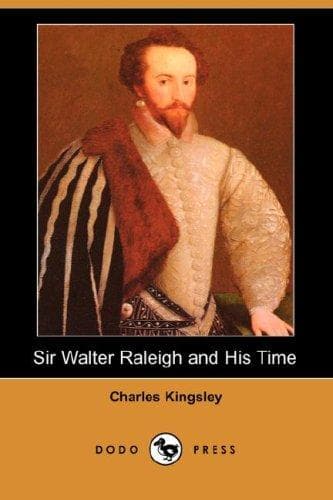
Great Britain -- History; Raleigh, Walter, Sir, 1552?-1618
It was an immense conception: a glorious one: it stood out so clear:
there was no mistake about its being the absolutely right, wise,
patriotic thing; and so feasible, too, if Raleigh could but find ‘_six
cents hommes qui savaient mourir_.’ But that was just what he could not
find. He could draw round him, and did, by the spiritual magnetism of
his genius, many a noble soul; but he could not organise them, as he
seems to have tried to do, into a coherent body. The English spirit of
independent action, never stronger than in that age, and most wisely
encouraged, for other reasons, by good Queen Bess, was too strong for
him. His pupils will ‘fight on their own hook’ like so many Yankee
rangers: quarrel with each other: grumble at him. For the truth is, he
demands of them too high a standard of thought and purpose. He is often
a whole heaven above them in the hugeness of his imagination, the
nobleness of his motive; and Don Quixote can often find no better squire
than Sancho Panza. Even glorious Sir Richard Grenvile makes a mistake:
burns an Indian village because they steal a silver cup; throws back the
colonisation of Virginia ten years with his over-strict notions of
discipline and retributive justice; and Raleigh requites him for his
offence by embalming him, his valour and his death, not in immortal
verse, but in immortal prose. The ‘True Relation of the Fight at the
Azores’ gives the keynote of Raleigh’s heart. If readers will not take
that as the text on which his whole life is a commentary they may know a
great deal about him, but him they will never know.
The game becomes fiercer and fiercer. Blow and counterblow between the
Spanish king, for the whole West-Indian commerce was a government job,
and the merchant nobles of England. At last the Great Armada comes, and
the Great Armada goes again. _Venit_, _vidit_, _fugit_, as the medals
said of it. And to Walter Raleigh’s counsel, by the testimony of all
contemporaries, the mighty victory is to be principally attributed.
Where all men did heroically, it were invidious to bestow on him alone a
crown, _ob patriam servatam_. But henceforth, Elizabeth knows well that
she has not been mistaken in her choice; and Raleigh is better loved than
ever, heaped with fresh wealth and honours. And who deserves them
better?
The immense value of his services in the defence of England should excuse
him from the complaint which one has been often inclined to bring against
him,—Why, instead of sending others Westward Ho, did be not go himself?
Surely he could have reconciled the jarring instruments with which he was
working. He could have organised such a body of men as perhaps never
went out before or since on the same errand. He could have done all that
Cortez did, and more; and done it more justly and mercifully.
Public-domain text, read in full here on John Shaqi.
Reviews
Reviews
No reviews yet
Be the first to share your thoughts on this work.
Join the Discussion
Join the discussion
Sign in to leave a comment or review.
Sign InorCreate an account