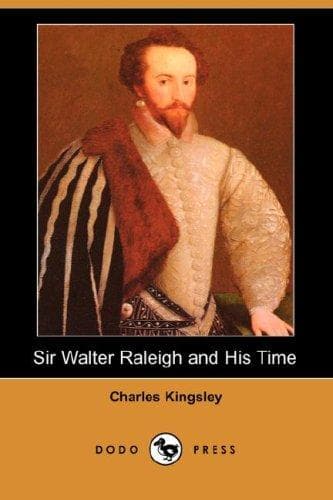
Great Britain -- History; Raleigh, Walter, Sir, 1552?-1618
Anything to forget the handwriting on the wall, which will not be
forgotten. But he will do all the good which he can meanwhile,
nevertheless. He will serve God and Mammon. So complete a man will
surely be able to do both. Unfortunately the thing is impossible, as he
discovers too late: but he certainly goes as near success in the attempt
as ever man did. Everywhere we find him doing justly and loving mercy.
Wherever this man steps he leaves his footprint ineffaceably in deeds of
benevolence. For one year only, it seems, he is governor of Jersey; yet
to this day, it is said, the islanders honour his name, only second to
that of Duke Rollo, as their great benefactor, the founder of their
Newfoundland trade. In the west country he is ‘as a king,’ ‘with ears
and mouth always open to hear and deliver their grievances, feet and
hands ready to go and work their redress.’ The tin-merchants have become
usurers ‘of fifty in the hundred.’ Raleigh works till he has put down
their ‘abominable and cut-throat dealing.’ There is a burdensome
west-country tax on curing fish; Raleigh works till it is revoked. In
Parliament he is busy with liberal measures, always before his
generation. He puts down a foolish act for compulsory sowing of hemp in
a speech on the freedom of labour worthy of the nineteenth century. He
argues against raising the subsidy from the three-pound men—‘Call you
this, Mr. Francis Bacon, _par jugum_, when a poor man pays as much as a
rich?’ He is equally rational and spirited against the exportation of
ordnance to the enemy; and when the question of abolishing monopolies is
mooted he has his wise word. He too is a monopolist of tin, as Lord
Warden of the Stannaries. But he has so wrought as to bring good out of
evil; for ‘before the granting of his patent, let the price of tin be
never so high, the poor workman never had but two shillings a week’; yet
now, so has he extended and organised the tin-works, ‘that any man who
will can find work, be tin at what price soever, and have four shillings
a week truly paid . . . Yet if all others may be repealed, I will give my
consent as freely to the cancelling of this as any member of this house.’
Most of the monopolies were repealed: but we do not find that Raleigh’s
was among them. Why should it be if its issue was more tin, full work,
and double wages? In all things this man approves himself faithful in
his generation. His sins are not against man, but against God; such as
the world thinks no sins, and hates them, not from morality, but from
envy.
Public-domain text, read in full here on John Shaqi.
Reviews
Reviews
No reviews yet
Be the first to share your thoughts on this work.
Join the Discussion
Join the discussion
Sign in to leave a comment or review.
Sign InorCreate an account