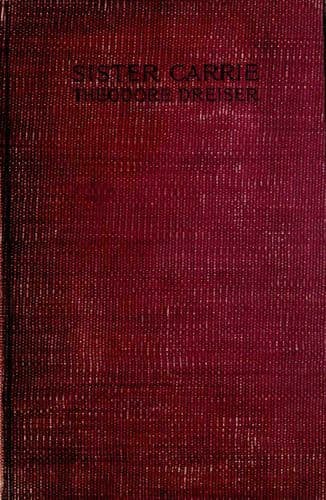
Chicago (Ill.) -- Fiction; Didactic fiction; Mistresses -- Fiction; New York (N.Y.) -- Fiction; Young women -- Fiction
Now, in regard to his pursuit of women, he meant them no harm, because
he did not conceive of the relation which he hoped to hold with them as
being harmful. He loved to make advances to women, to have them succumb
to his charms, not because he was a cold-blooded, dark, scheming
villain, but because his inborn desire urged him to that as a chief
delight. He was vain, he was boastful, he was as deluded by fine clothes
as any silly-headed girl. A truly deep-dyed villain could have
hornswaggled him as readily as he could have flattered a pretty
shop-girl. His fine success as a salesman lay in his geniality and the
thoroughly reputable standing of his house. He bobbed about among men, a
veritable bundle of enthusiasm--no power worthy the name of intellect,
no thoughts worthy the adjective noble, no feelings long continued in
one strain. A Madame Sappho would have called him a pig; a Shakespeare
would have said "my merry child;" old, drinking Caryoe thought him a
clever, successful business man. In short, he was as good as his
intellect conceived.
The best proof that there was something open and commendable about the
man was the fact that Carrie took the money. No deep, sinister soul with
ulterior motives could have given her fifteen cents under the guise of
friendship. The unintellectual are not so helpless. Nature has taught
the beasts of the field to fly when some unheralded danger threatens.
She has put into the small, unwise head of the chipmunk the untutored
fear of poisons. "He keepeth His creatures whole," was not written of
beasts alone. Carrie was unwise, and, therefore, like the sheep in its
unwisdom, strong in feeling. The instinct of self-protection, strong in
all such natures, was roused but feebly, if at all, by the overtures of
Drouet.
When Carrie had gone, he felicitated himself upon her good opinion. By
George, it was a shame young girls had to be knocked around like that.
Cold weather coming on and no clothes. Tough. He would go around to
Fitzgerald and Moy's and get a cigar. It made him feel light of foot as
he thought about her.
Carrie reached home in high good spirits, which she could scarcely
conceal. The possession of the money involved a number of points which
perplexed her seriously. How should she buy any clothes when Minnie knew
that she had no money? She had no sooner entered the flat than this
point was settled for her. It could not be done. She could think of no
way of explaining.
"How did you come out?" asked Minnie, referring to the day.
Carrie had none of the small deception which could feel one thing and
say something directly opposed. She would prevaricate, but it would be
in the line of her feelings at least. So instead of complaining when she
felt so good, she said:
"I have the promise of something."
"Where?"
"At the Boston Store."
"Is it sure promised?" questioned Minnie.
"Well, I'm to find out to-morrow," returned Carrie, disliking to draw
out a lie any longer than was necessary.
Public-domain text, read in full here on John Shaqi.
Reviews
Reviews
No reviews yet
Be the first to share your thoughts on this work.
Join the Discussion
Join the discussion
Sign in to leave a comment or review.
Sign InorCreate an account