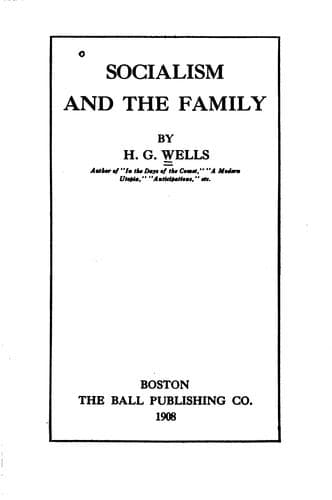
Socialism and the familyWells, H. G. (Herbert George)
General
Socialism and the family
Wells, H. G. (Herbert George)
Families; Middle class; Socialism
There is yet another and still more effectual system of strains at work
in the existing social unit, and that is the strain between parents and
children. That has always existed. It is one of our most transparent
sentimental pretences that there is any natural subordination of son to
father, of daughter to mother. As a matter of fact a good deal of
natural antagonism appears at the adolescence of the young. Something
very like an instinct stirs in them, to rebel, to go out. The old habits
of solicitude, control and restraint in the parent become more and more
hampering, irksome, and exasperating to the offspring. The middle-class
son gets away in spirit and in fact to school, to college, to
business—his sister does all she can to follow his excellent example. In
a world with vast moral and intellectual changes in progress the
intelligent young find the personal struggle for independence
intensified by a conflict of ideas. The modern tendency to cherish and
preserve youthfulness; the keener desire for living that prevents women
getting fat and ugly, and men bald and incompetent by forty-five, is
another dissolvent factor among these stresses. The daughter is not only
restrained by her mother’s precepts, but inflamed by her example. The
son finds his father’s coevals treating him as a contemporary.
Well, into these conflicts and disorders comes Socialism, and Socialism
alone, to explain, to justify, to propose new conventions and new
interpretations of relationship, to champion the reasonable claims of
the young, to mitigate the thwarted ownership of the old. Socialism
comes, constructive amid the wreckage.
Public-domain text, read in full here on John Shaqi.
Reviews
Reviews
No reviews yet
Be the first to share your thoughts on this work.
Join the Discussion
Join the discussion
Sign in to leave a comment or review.
Sign InorCreate an account