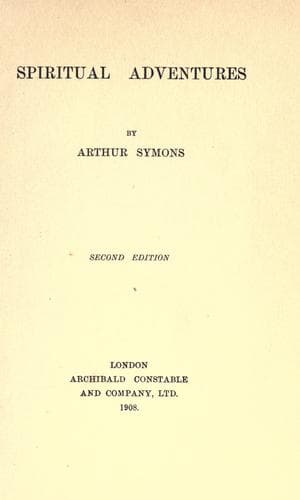
Great Britain -- Social life and customs -- 19th century -- Fiction; Short stories
He went home, and opened the piano; but he was afraid of it, and shut it
up, and went to bed. He slept well, but he dreamed that he was on the
island of Portland, among the convicts; there was a woman with him, who
seemed to be Rana, and they had tea at a farm, high up among trees; and
then he went away and forgot her, and found himself in a lonely place
where there were a number of cucumber-frames on the ground, and several
convicts were laid out asleep in each, half-naked, and packed together
head to heel. Then he remembered the woman, and went back to the farm
where he had left her; but she was no longer there, she had gone to look
for him, and he thought she must have lost her way among the convicts.
He was greatly distressed, but he found he was walking with her along
Piccadilly, and she told him that she had been waiting for him a long
time in an omnibus which had stopped at the corner of the Circus.
When he awoke in the morning he was relieved to find that his brain
seemed to have become quite clear, surprisingly clear, as if the fog
that had been gathering about him had lifted; and he sat at the piano
playing for many hours, and when he had finished playing he heard still
more ravishing sounds in the air, a music which was like what Chopin
might have written in Paradise. Tears of delight came into his eyes; he
sat listening in an ecstasy. Now everything had come right; all the
trouble and confusion had gone out of the sounds; they no longer teased
him with their muttering, coming and going elusively; they were all
about him, they flooded the air, they were like pure joy, speaking at
last its own language.
And for days after that he went about with a strange, secret smile on
his face, more than reconciled to his new companion, enamoured of him;
and at last he could keep the secret no longer, but had to tell every
one he met of this miracle that now went with him wherever he went. When
he stopped listening, and played the music that he had known before this
new music spoke to him, he seemed to play better than he had ever played
before. Only, when he had stopped playing, he sank back sleepily into
his ecstatic oblivion, not distinguishing between those he talked with
in his dream (the Chopin out of Paradise) and the few remaining friends,
who now came about him pityingly, and tried to do what they could for
him. Their coming awakened him a little; he awoke enough to realise that
they thought him mad; and it was with a very lucid fear that he waited
now for the doctor who was to decide finally whether he might still keep
his place in the world.
* * * * *
Public-domain text, read in full here on John Shaqi.
Reviews
Reviews
No reviews yet
Be the first to share your thoughts on this work.
Join the Discussion
Join the discussion
Sign in to leave a comment or review.
Sign InorCreate an account