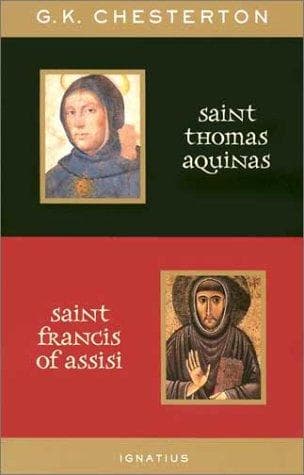
St. Francis of AssisiChesterton, G. K. (Gilbert Keith)
Religion
St. Francis of Assisi
Chesterton, G. K. (Gilbert Keith)
Francis, of Assisi, Saint, 1182-1226
Now everybody knows, I imagine, that the twelfth and thirteenth
centuries were an awakening of the world. They were a fresh flowering of
culture and the creative arts after a long spell of much sterner and
even more sterile experience which we call the Dark Ages. They may be
called an emancipation; they were certainly an end; an end of what may
at least seem a harsher and more inhuman time. But what was it that was
ended? From what was it that men were emancipated? That is where there
is a real collision and point at issue between the different
philosophies of history. On the merely external and secular side, it has
been truly said that men awoke from a sleep; but there had been dreams
in that sleep of a mystical and sometimes of a monstrous kind. In that
rationalistic routine into which most modern historians have fallen, it
is considered enough to say that they were emancipated from mere savage
superstition and advanced towards mere civilised enlightenment. Now this
is the big blunder that stands as a stumbling-block at the very
beginning of our story. Anybody who supposes that the Dark Ages were
plain darkness and nothing else, and that the dawn of the thirteenth
century was plain daylight and nothing else, will not be able to make
head or tail of the human story of St. Francis of Assisi. The truth is
that the joy of St. Francis and his Jongleurs de Dieu was not merely an
awakening. It was something which cannot be understood without
understanding their own mystical creed. The end of the Dark Ages was not
merely the end of a sleep. It was certainly not merely the end of a
superstitious enslavement. It was the end of something belonging to a
quite definite but quite different order of ideas.
It was the end of a penance; or, if it be preferred, a purgation. It
marked the moment when a certain spiritual expiation had been finally
worked out and certain spiritual diseases had been finally expelled from
the system. They had been expelled by an era of asceticism, which was
the only thing that could have expelled them. Christianity had entered
the world to cure the world; and she had cured it in the only way in
which it could be cured.
Viewed merely in an external and experimental fashion, the whole of the
high civilisation of antiquity had ended in the learning of a certain
lesson; that is, in its conversion to Christianity. But that lesson was
a psychological fact as well as a theological faith. That pagan
civilisation had indeed been a very high civilisation. It would not
weaken our thesis, it might even strengthen it, to say that it was the
highest that humanity ever reached. It had discovered its still
unrivalled arts of poetry and plastic representation; it had discovered
its own permanent political ideals; it had discovered its own clear
system of logic and of language. But above all, it had discovered its
own mistake.
Public-domain text, read in full here on John Shaqi.
Reviews
Reviews
No reviews yet
Be the first to share your thoughts on this work.
Join the Discussion
Join the discussion
Sign in to leave a comment or review.
Sign InorCreate an account