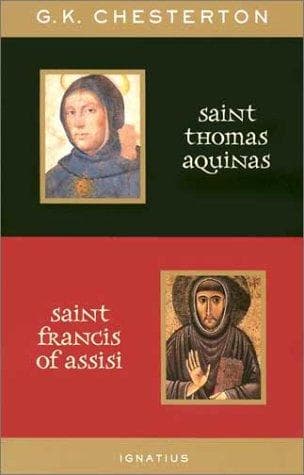
St. Francis of AssisiChesterton, G. K. (Gilbert Keith)
Religion
St. Francis of Assisi
Chesterton, G. K. (Gilbert Keith)
Francis, of Assisi, Saint, 1182-1226
First, he may deal with this great and most amazing man as a figure in
secular history and a model of social virtues. He may describe this
divine demagogue as being, as he probably was, the world's one quite
sincere democrat. He may say (what means very little) that St. Francis
was in advance of his age. He may say (what is quite true) that
St. Francis anticipated all that is most liberal and sympathetic in the
modern mood; the love of nature; the love of animals; the sense of
social compassion; the sense of the spiritual dangers of prosperity and
even of property. All those things that nobody understood before
Wordsworth were familiar to St. Francis. All those things that were
first discovered by Tolstoy had been taken for granted by St. Francis.
He could be presented, not only as a human but a humanitarian hero;
indeed as the first hero of humanism. He has been described as a sort of
morning star of the Renaissance. And in comparison with all these
things, his ascetical theology can be ignored or dismissed as a
contemporary accident, which was fortunately not a fatal accident. His
religion can be regarded as a superstition, but an inevitable
superstition, from which not even genius could wholly free itself; in
the consideration of which it would be unjust to condemn St. Francis for
his self-denial or unduly chide him for his chastity. It is quite true
that even from so detached a standpoint his stature would still appear
heroic. There would still be a great deal to be said about the man who
tried to end the Crusades by talking to the Saracens or who interceded
with the Emperor for the birds. The writer might describe in a purely
historical spirit the whole of that great Franciscan inspiration that
was felt in the painting of Giotto, in the poetry of Dante, in the
miracle plays that made possible the modern drama, and in so many other
things that are already appreciated by the modern culture. He may try to
do it, as others have done, almost without raising any religious
question at all. In short, he may try to tell the story of a saint
without God; which is like being told to write the life of Nansen and
forbidden to mention the North Pole.
Public-domain text, read in full here on John Shaqi.
Reviews
Reviews
No reviews yet
Be the first to share your thoughts on this work.
Join the Discussion
Join the discussion
Sign in to leave a comment or review.
Sign InorCreate an account