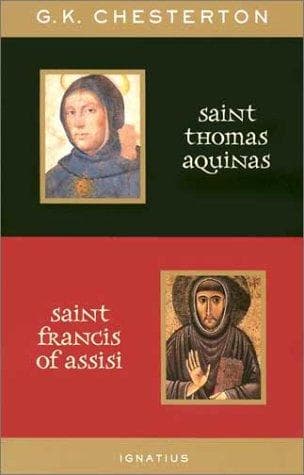
St. Francis of AssisiChesterton, G. K. (Gilbert Keith)
Religion
St. Francis of Assisi
Chesterton, G. K. (Gilbert Keith)
Francis, of Assisi, Saint, 1182-1226
The first biographers of Francis, naturally alive with the great
religious revolution that he wrought, equally naturally looked back to
his first years chiefly for omens and signs of such a spiritual
earthquake. But writing at a greater distance, we shall not decrease
that dramatic effect, but rather increase it, if we realise that there
was not at this time any external sign of anything particularly mystical
about the young man. He had not anything of that early sense of his
vocation that has belonged to some of the saints. Over and above his
main ambition to win fame as a French poet, he would seem to have most
often thought of winning fame as a soldier. He was born kind; he was
brave in the normal boyish fashion; but he drew the line both in
kindness and bravery pretty well where most boys would have drawn it;
for instance, he had the human horror of leprosy of which few normal
people felt any need to be ashamed. He had the love of gay and bright
apparel which was inherent in the heraldic taste of medieval times and
seems altogether to have been rather a festive figure. If he did not
paint the town red, he would probably have preferred to paint it all the
colours of the rainbow, as in a medieval picture. But in this story of
the young man in gay garments scampering after the vanishing beggar in
rags there are certain notes of his natural individuality that must be
assumed from first to last.
For instance, there is the spirit of swiftness. In a sense he continued
running for the rest of his life, as he ran after the beggar. Because
nearly all the errands he ran on were errands of mercy, there appeared
in his portraiture a mere element of mildness which was true in the
truest sense, but is easily misunderstood. A certain precipitancy was
the very poise of his soul. This saint should be represented among the
other saints as angels were sometimes represented in pictures of angels;
with flying feet or even with feathers; in the spirit of the text that
makes angels winds and messengers a flaming fire. It is a curiosity of
language that courage actually means running; and some of our sceptics
will no doubt demonstrate that courage really means running away. But
his courage was running, in the sense of rushing. With all his
gentleness, there was originally something of impatience in his
impetuosity. The psychological truth about it illustrates very well the
modern muddle about the word "practical." If we mean by what is
practical what is most immediately practicable, we mean merely what is
easiest. In that sense St. Francis was very unpractical, and his
ultimate aims were very unworldly. But if we mean by practicality a
preference for prompt effort and energy over doubt or delay, he was very
practical indeed. Some might call him a madman, but he was the very
reverse of a dreamer. Nobody would be likely to call him a man of
business; but he was very emphatically a man of action. In some of his
Public-domain text, read in full here on John Shaqi.
Reviews
Reviews
No reviews yet
Be the first to share your thoughts on this work.
Join the Discussion
Join the discussion
Sign in to leave a comment or review.
Sign InorCreate an account