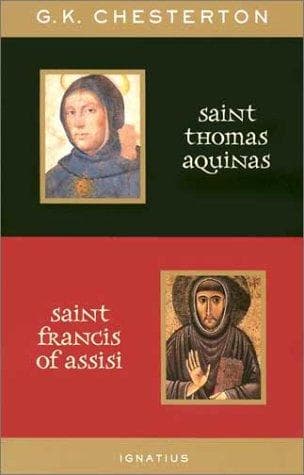
St. Francis of AssisiChesterton, G. K. (Gilbert Keith)
Religion
St. Francis of Assisi
Chesterton, G. K. (Gilbert Keith)
Francis, of Assisi, Saint, 1182-1226
In dealing with this difficult passage, especially for my own purpose of
making things moderately easy for the more secular sympathiser, I have
hesitated as to the proper course; and have eventually decided to state
first of all what happened, with little more than a hint of what I
imagine to have been the meaning of what happened. The fuller meaning
may be debated more easily afterwards, when it was unfolded in the full
Franciscan life. Anyhow what happened was this. The story very largely
revolves round the ruins of the Church of St. Damian, an old shrine in
Assisi which was apparently neglected and falling to pieces. Here
Francis was in the habit of praying before the crucifix during these
dark and aimless days of transition that followed the tragical collapse
of all his military ambitions, probably made bitter by some loss of
social prestige terrible to his sensitive spirit. As he did so he heard
a voice saying to him, "Francis, seest thou not that my house is in
ruins? Go and restore it for me."
Francis sprang up and went. To go and do something was one of the
driving demands of his nature; probably he had gone and done it before
he had at all thoroughly thought out what he had done. In any case what
he had done was something very decisive and immediately very disastrous
for his singular social career. In the coarse conventional language of
the uncomprehending world, he stole. From his own enthusiastic point of
view, he extended to his venerable father Peter Bernardone the exquisite
excitement and inestimable privilege of assisting, more or less
unconsciously, in the rebuilding of St. Damian's Church. In point of
fact what he did was first to sell his own horse and then to go off and
sell several bales of his father's cloth, making the sign of the cross
over them to indicate their pious and charitable destination. Peter
Bernardone did not see things in this light. Peter Bernardone indeed had
not very much light to see by, so far as understanding the genius and
temperament of his extraordinary son was concerned. Instead of
understanding in what sort of a wind and flame of abstract appetites the
lad was living, instead of simply telling him (as the priest practically
did later) that he had done an indefensible thing with the best
intentions, old Bernardone took up the matter in the hardest style; in a
legal and literal fashion. He used absolute political powers like a
heathen father, and himself put his son under lock and key as a vulgar
thief. It would appear that the cry was caught up among many with whom
the unlucky Francis had once been popular; and altogether, in his
efforts to build up the house of God he had only succeeded in bringing
his own house about his ears and lying buried under the ruins. The
quarrel dragged drearily through several stages; at one time the
wretched young man seems to have disappeared underground, so to speak,
into some cavern or cellar where he remained huddled hopelessly in the
darkness.
Public-domain text, read in full here on John Shaqi.
Reviews
Reviews
No reviews yet
Be the first to share your thoughts on this work.
Join the Discussion
Join the discussion
Sign in to leave a comment or review.
Sign InorCreate an account