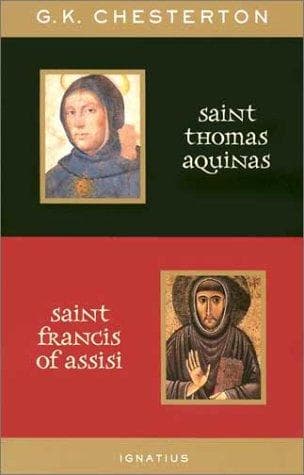
St. Francis of AssisiChesterton, G. K. (Gilbert Keith)
Religion
St. Francis of Assisi
Chesterton, G. K. (Gilbert Keith)
Francis, of Assisi, Saint, 1182-1226
Anyhow, it was his blackest moment; the whole world had turned
over; the whole world was on top of him.
When he came out, it was only perhaps gradually that anybody grasped
that something had happened. He and his father were summoned in the
court of the bishop; for Francis had refused the authority of all legal
tribunals. The bishop addressed some remarks to him, full of that
excellent common sense which the Catholic Church keeps permanently as
the background for all the fiery attitudes of her saints. He told
Francis that he must unquestionably restore the money to his father;
that no blessing could follow a good work done by unjust methods; and in
short (to put it crudely) if the young fanatic would give back his money
to the old fool, the incident would then terminate. There was a new air
about Francis. He was no longer crushed, still less crawling, so far as
his father was concerned; yet his words do not, I think, indicate either
just indignation or wanton insult or anything in the nature of a mere
continuation of the quarrel. They are rather remotely akin to mysterious
utterances of his great model, "What have I to do with thee?" or even
the terrible "Touch me not."
He stood up before them all and said, "Up to this time I have called
Pietro Bernardone father, but now I am the servant of God. Not only the
money but everything that can be called his I will restore to my father,
even the very clothes he has given me." And he rent off all his garments
except one; and they saw that that was a hair-shirt.
He piled the garments in a heap on the floor and tossed the money on top
of them. Then he turned to the bishop, and received his blessing, like
one who turns his back on society; and, according to the account, went
out as he was into the cold world. Apparently it was literally a cold
world at the moment, and snow was on the ground. A curious detail, very
deep in its significance, I fancy, is given in the same account of this
great crisis in his life. He went out half-naked in his hair-shirt into
the winter woods, walking the frozen ground between the frosty trees; a
man without a father. He was penniless, he was parentless, he was to all
appearance without a trade or a plan or a hope in the world; and as he
went under the frosty trees, he burst suddenly into song.
Public-domain text, read in full here on John Shaqi.
Reviews
Reviews
No reviews yet
Be the first to share your thoughts on this work.
Join the Discussion
Join the discussion
Sign in to leave a comment or review.
Sign InorCreate an account