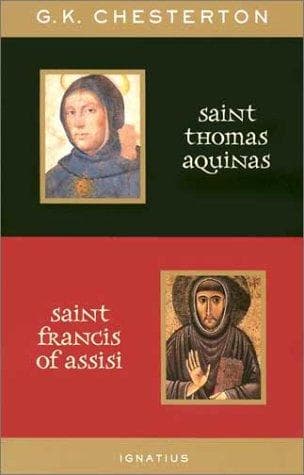
St. Francis of AssisiChesterton, G. K. (Gilbert Keith)
Religion
St. Francis of Assisi
Chesterton, G. K. (Gilbert Keith)
Francis, of Assisi, Saint, 1182-1226
Nothing has been said here at any length of the great culture of the
Troubadours as it appeared in Provence or Languedoc, great as was their
influence in history and their influence on St. Francis. Something more
may be said of them when we come to summarise his relation to history;
it is enough to note here in a few sentences the facts about them that
were relevant to him, and especially the particular point now in
question, which was the most relevant of all. Everybody knows who the
Troubadours were; everybody knows that very early in the Middle Ages, in
the twelfth and early thirteenth centuries, there arose a civilisation
in Southern France which threatened to rival or eclipse the rising
tradition of Paris. Its chief product was a school of poetry, or rather
more especially a school of poets. They were primarily love-poets,
though they were often also satirists and critics of things in general.
Their picturesque posture in history is largely due to the fact that
they sang their own poems and often played their own accompaniments, on
the light musical instruments of the period; they were minstrels as well
as men of letters. Allied to their love-poetry were other institutions
of a decorative and fanciful kind concerned with the same theme. There
was what was called the "Gay Science," the attempt to reduce to a sort
of system the fine shades of flirtation and philandering. There were the
things called Courts of Love, in which the same delicate subjects were
dealt with with legal pomp and pedantry. There is one point in this part
of the business that must be remembered in relation to St. Francis.
There were manifest moral dangers in all this superb sentimentalism; but
it is a mistake to suppose that its only danger of exaggeration was in
the direction of sensualism. There was a strain in the southern romance
that was actually an excess of spirituality; just as the pessimist
heresy it produced was in one sense an excess of spirituality. The love
was not always animal; sometimes it was so airy as to be almost
allegorical. The reader realises that the lady is the most beautiful
being that can possibly exist, only he has occasional doubts as to
whether she does exist. Dante owed something to the Troubadours; and the
critical debates about his ideal woman are an excellent example of these
doubts. We know that Beatrice was not his wife, but we should in any
case be equally sure that she was not his mistress; and some critics
have even suggested that she was nothing at all, so to speak, except his
muse. This idea of Beatrice as an allegorical figure is, I believe,
unsound; it would seem unsound to any man who has read the _Vita Nuova_
and has been in love. But the very fact that it is possible to suggest
it illustrates something abstract and scholastic in these medieval
passions. But though they were abstract passions they were very
passionate passions. These men could feel almost like lovers, even about
allegories and abstractions.
Public-domain text, read in full here on John Shaqi.
Reviews
Reviews
No reviews yet
Be the first to share your thoughts on this work.
Join the Discussion
Join the discussion
Sign in to leave a comment or review.
Sign InorCreate an account