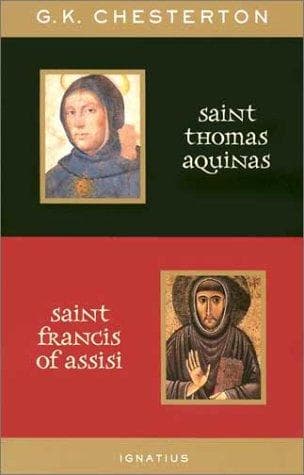
St. Francis of AssisiChesterton, G. K. (Gilbert Keith)
Religion
St. Francis of Assisi
Chesterton, G. K. (Gilbert Keith)
Francis, of Assisi, Saint, 1182-1226
straightway forgets what manner of man he was. "Hitherto I have called
Pietro Bernardone father; but now I am the servant of God."
All these profound matters must be suggested in short and imperfect
phrases; and the shortest statement of one aspect of this illumination
is to say that it is the discovery of an infinite debt. It may seem a
paradox to say that a man may be transported with joy to discover that
he is in debt. But this is only because in commercial cases the creditor
does not generally share the transports of joy; especially when the debt
is by hypothesis infinite and therefore unrecoverable. But here again
the parallel of a natural love-story of the nobler sort disposes of the
difficulty in a flash. There the infinite creditor does share the joy of
the infinite debtor; for indeed they are both debtors and both
creditors. In other words debt and dependence do become pleasures in the
presence of unspoilt love; the word is used too loosely and luxuriously
in popular simplifications like the present; but here the word is really
the key. It is the key of all the problems of Franciscan morality which
puzzle the merely modern mind; but above all it is the key of
asceticism. It is the highest and holiest of the paradoxes that the man
who really knows he cannot pay his debt will be for ever paying it. He
will be for ever giving back what he cannot give back, and cannot be
expected to give back. He will be always throwing things away into a
bottomless pit of unfathomable thanks. Men who think they are too modern
to understand this are in fact too mean to understand it; we are most of
us too mean to practise it. We are not generous enough to be ascetics;
one might almost say not genial enough to be ascetics. A man must have
magnanimity of surrender, of which he commonly only catches a glimpse in
first love, like a glimpse of our lost Eden. But whether he sees it or
not, the truth is in that riddle; that the whole world has, or is, only
one good thing; and it is a bad debt.
Public-domain text, read in full here on John Shaqi.
Reviews
Reviews
No reviews yet
Be the first to share your thoughts on this work.
Join the Discussion
Join the discussion
Sign in to leave a comment or review.
Sign InorCreate an account