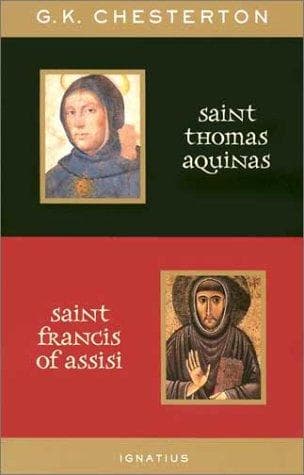
St. Francis of AssisiChesterton, G. K. (Gilbert Keith)
Religion
St. Francis of Assisi
Chesterton, G. K. (Gilbert Keith)
Francis, of Assisi, Saint, 1182-1226
If ever that rarer sort of romantic love, which was the truth that
sustained the Troubadours, falls out of fashion and is treated as
fiction, we may see some such misunderstanding as that of the modern
world about asceticism. For it seems conceivable that some barbarians
might try to destroy chivalry in love, as the barbarians ruling in
Berlin destroyed chivalry in war. If that were ever so, we should have
the same sort of unintelligent sneers and unimaginative questions. Men
will ask what selfish sort of woman it must have been who ruthlessly
exacted tribute in the form of flowers, or what an avaricious creature
she can have been to demand solid gold in the form of a ring; just as
they ask what cruel kind of God can have demanded sacrifice and
self-denial. They will have lost the clue to all that lovers have meant
by love; and will not understand that it was because the thing was not
demanded that it was done. But whether or no any such lesser things will
throw a light on the greater, it is utterly useless to study a great
thing like the Franciscan movement while remaining in the modern mood
that murmurs against gloomy asceticism. The whole point about
St. Francis of Assisi is that he certainly was ascetical and he
certainly was not gloomy. As soon as ever he had been unhorsed by the
glorious humiliation of his vision of dependence on the divine love, he
flung himself into fasting and vigil exactly as he had flung himself
furiously into battle. He had wheeled his charger clean round, but there
was no halt or check in the thundering impetuosity of his charge. There
was nothing negative about it; it was not a regimen or a stoical
simplicity of life. It was not self-denial merely in the sense of
self-control. It was as positive as a passion; it had all the air of
being as positive as a pleasure. He devoured fasting as a man devours
food. He plunged after poverty as men have dug madly for gold. And it is
precisely the positive and passionate quality of this part of his
personality that is a challenge to the modern mind in the whole problem
of the pursuit of pleasure. There undeniably is the historical fact; and
there attached to it is another moral fact almost as undeniable. It is
certain that he held on this heroic or unnatural course from the moment
when he went forth in his hair-shirt into the winter woods to the moment
when he desired even in his death agony to lie bare upon the bare
ground, to prove that he had and that he was nothing. And we can say,
with almost as deep a certainty, that the stars which passed above that
gaunt and wasted corpse stark upon the rocky floor had for once, in all
their shining cycles round the world of labouring humanity, looked down
upon a happy man.
_Chapter VI_
_The Little Poor Man_
Public-domain text, read in full here on John Shaqi.
Reviews
Reviews
No reviews yet
Be the first to share your thoughts on this work.
Join the Discussion
Join the discussion
Sign in to leave a comment or review.
Sign InorCreate an account