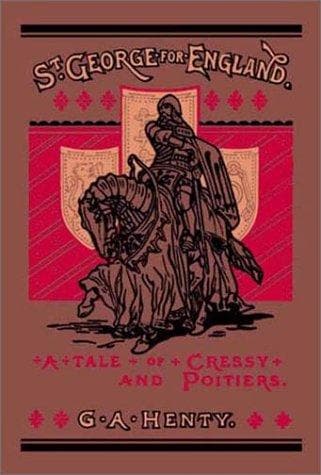
St. George for EnglandHenty, G. A. (George Alfred)
History
St. George for England
Henty, G. A. (George Alfred)
Great Britain -- History -- Edward III, 1327-1377 -- Fiction
be sure of an invitation to come in in the evening and take a stoup of
ale, and tell of the battles and sieges he had gone through, and in the
course of the evening would be asked to have a bout of arms with the
young apprentice, whom Geoffrey represented as being eager to learn how
to use the sword as well as how to make it.
Thus Walter became accustomed to different styles of fighting, but found
that very few, indeed, of their visitors were nearly so well skilled
with their arms as his master. Some of the soldiers were mortified at
finding themselves unable to hold their own with a boy; others would
take their reverses in good part and would come again, bringing with
them some comrade known to be particularly skilled with his weapons,
to try the temper of the armourer's apprentice. At the age of fifteen
Walter had won the prize at the sports, both for the best cudgel play
and the best sword-and-buckler play among the apprentices, to the great
disgust of many who had almost reached the age of manhood and were just
out of their time.
On Sundays Walter always spent the day with Giles Fletcher and his wife,
going to mass with them and walking in the fields, where, after service,
the citizens much congregated. Since Walter had gone to work he had
taken no part in the fights and frolics of his former comrades; he was
in fact, far too tired at the end of his day's work to have any desire
to do aught but to sit and listen to the tales of the wars, of the many
old soldiers who pervaded the country. Some of these men were disabled
by wounds or long service, but the greater portion were idle scamps, who
cared not for the hard blows and sufferings of a campaign, liking better
to hang about taverns drinking, at the expense of those to whom they
related fabulous tales of the gallant actions they had performed. Many,
too, wandered over the country, sometimes in twos or threes, sometimes
in large bands, robbing and often murdering travelers or attacking
lonely houses. When in one part or another their ill deeds became too
notorious, the sheriffs would call out a posse of men and they would be
hunted down like wild beasts. It was not, however, easy to catch them,
for great tracts of forests still covered a large portion of the country
and afforded them shelter.
Public-domain text, read in full here on John Shaqi.
Reviews
Reviews
No reviews yet
Be the first to share your thoughts on this work.
Join the Discussion
Join the discussion
Sign in to leave a comment or review.
Sign InorCreate an account