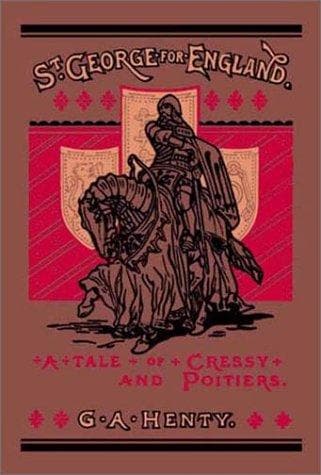
St. George for EnglandHenty, G. A. (George Alfred)
History
St. George for England
Henty, G. A. (George Alfred)
Great Britain -- History -- Edward III, 1327-1377 -- Fiction
In the country round London these pests were very numerous, for here,
more than anywhere else, was there a chance of plunder. The swamps on
the south side of the river had an especially evil reputation. From
Southwark to Putney stretches a marshy country over which, at high
tides, the river frequently flowed. Here and there were wretched huts,
difficult of access and affording good hiding-places for those pursued
by justice, since searchers could be seen approaching a long way off,
and escape could be made by paths across the swamp known only to the
dwellers there, and where heavily-armed men dared not follow. Further
south, in the wild country round Westerham, where miles of heath and
forest stretched away in all directions, was another noted place where
the robber vagrants mustered thickly, and the Sheriff of Kent had much
trouble with them.
The laws in those days were extremely severe, and death was the penalty
of those caught plundering. The extreme severity of the laws, however,
operated in favour of its breakers, since the sympathy of the people who
had little to lose was with them, and unless caught red-handed in
the act they could generally escape, since none save those who had
themselves been robbed would say aught that would place the pursuers
on their traces, or give testimony which would cost the life of a
fellow-creature. The citizens of London were loud in their complaints
against the discharged soldiers, for it was upon them that the loss
mainly fell, and it was on their petitions to the king that the sheriffs
of Middlesex and Hertford, Essex, Surrey, and Kent, were generally
stirred up to put down the ill-doers.
Sometimes these hunts were conducted in a wholesale way, and the whole
posse of a county would be called out. Then all found within its limits
who had not land or visible occupation were collected. Any against whom
charges could be brought home were hung without more ado, and the rest
were put on board ship and sent across the sea to the army. Sometimes,
when they found the country becoming too hot for them, these men would
take service with some knight or noble going to the war, anxious to take
with him as strong a following as might be, and not too particular as to
the character of his soldiers.
Walter, being of an adventurous spirit, was sometimes wont of a summer
evening, when his work was done, to wander across the marshes, taking
with him his bow and arrows, and often bringing home a wild duck or two
which he shot in the pools. More than once surly men had accosted him,
and had threatened to knock him on the head if they again found him
wandering that way; but Walter laughed at their threats, and seeing,
that though but an apprentice lad, he might be able to send an arrow as
straight to the mark as another, they were content to leave him alone.
Public-domain text, read in full here on John Shaqi.
Reviews
Reviews
No reviews yet
Be the first to share your thoughts on this work.
Join the Discussion
Join the discussion
Sign in to leave a comment or review.
Sign InorCreate an account