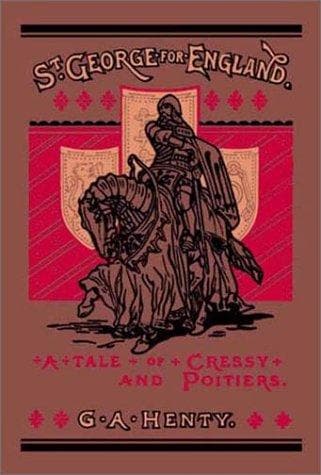
St. George for EnglandHenty, G. A. (George Alfred)
History
St. George for England
Henty, G. A. (George Alfred)
Great Britain -- History -- Edward III, 1327-1377 -- Fiction
Presently a sound of trumpets was heard, and the royal procession was
seen moving up from Westminster. Then the minor sports were abandoned;
the crowd gathered round the large fenced-in space, and those who,
by virtue of rank or position in the city, had places in the various
stands, took their places there.
There was a flourish of trumpets as the king and queen appeared in front
of the pavilion, accompanied by the Prince of Wales and many of the
nobles of the court, and a shout of welcome arose from the crowd. The
shooting at a mark at once began. The preliminary trials had been shot
off upon the preceding day, and the six chosen bowmen now took their
places.
Walter had not entered for the prizes at archery. He had on previous
years shot well; but since he had fully determined to become a
man-at-arms he had given up archery, for which, indeed, his work at the
forge and his exercises at arms when the fires were out, left him but
little time. The contest was a close one, and when it was over the
winner was led by the city marshal to the royal pavilion, where the
queen bestowed upon him a silver arrow, and the king added a purse of
money. Then there were several combats with quarterstaff and broadsword
between men who had served among the contingents sent by the city to
aid the king in his wars. Some good sword-play was shown and many stout
blows exchanged, two or three men were badly hurt, and the king and all
present were mightily pleased with the stoutness with which they fought.
The apprentices then came forward to compete for the prizes for
sword-play. They wore light iron caps and shirts of thickly quilted
leather, and fought with blunted swords, for the city fathers deemed
wisely that with these weapons they could equally show their skill, and
that with sharpened swords not only would severe wounds be given, but
bad blood would be created between the apprentices of the various wards.
Each ward sent its champion to the contest, and as these fought in
pairs, loud was the shouting which rose from their comrades at each blow
given or warded, and even the older citizens joined sometimes in the
shouting and took a warm interest in the champions of their respective
wards.
Public-domain text, read in full here on John Shaqi.
Reviews
Reviews
No reviews yet
Be the first to share your thoughts on this work.
Join the Discussion
Join the discussion
Sign in to leave a comment or review.
Sign InorCreate an account