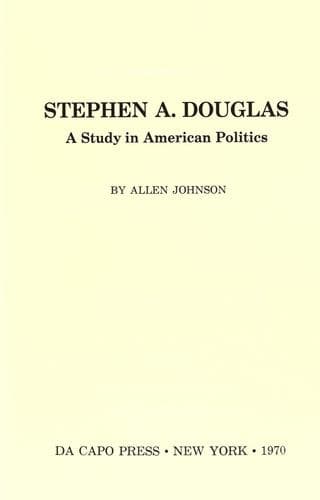
Stephen A. Douglas: A Study in American PoliticsJohnson, Allen
History
Stephen A. Douglas: A Study in American Politics
Johnson, Allen
Douglas, Stephen A. (Stephen Arnold), 1813-1861
A generation later a similar contest occurred for the separation of
the fourteen northern counties from the State. When Congress changed
the northern boundary of Illinois, it had deviated from the express
provisions of the Ordinance of 1787, which had drawn the line through
the southern bend of Lake Michigan. This departure from the Magna
Charta of the Northwest furnished the would-be secessionists with a
pretext. But an editorial in the _Northwestern Gazette and Galena
Advertiser_, January 20, 1842, naively disclosed their real motive.
Illinois was overwhelmed with debt, while Wisconsin was "young,
vigorous, and free from debt." "Look at the district as it is now,"
wrote the editor fervidly, "the _fag end_ of the State of
Illinois--its interest wholly disregarded in State legislation--in
short, treated as a mere _province_--taxed; laid under tribute in the
form of taxation for the benefit of the South and Middle." The right
of the people to determine by vote whether the counties should be
annexed to Illinois, was accepted without question. A meeting of
citizens in Jo Daviess County resolved, that "until the Ordinance of
1787 was altered by common consent, the free inhabitants of the region
had, in common with the free inhabitants of the Territory of
Wisconsin, an absolute, vested, indefeasible right to form a permanent
constitution and State government."[324] This was the burden of many
memorials of similar origin.
The desire of the people of Illinois to control local interests
extended most naturally to the soil which nourished them. That the
Federal Government should without their consent dispose of lands which
they had brought under cultivation, seemed to verge on tyranny. It
mattered not that the settler had taken up lands to which he had no
title in law. The wilderness belonged to him who subdued it.
Therefore land leagues and claim associations figure largely in the
history of the Northwest. Their object was everywhere the same, to
protect the squatter against the chance bidder at a public land sale.
Public-domain text, read in full here on John Shaqi.
Reviews
Reviews
No reviews yet
Be the first to share your thoughts on this work.
Elsewhere in the archive
Join the Discussion
Join the discussion
Sign in to leave a comment or review.
Sign InorCreate an account