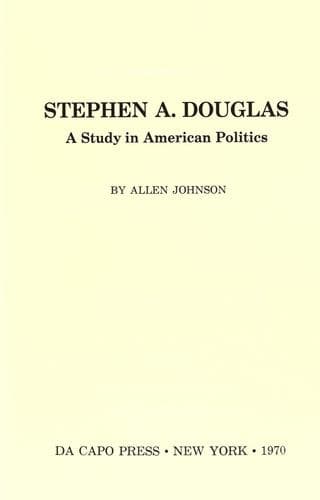
Stephen A. Douglas: A Study in American PoliticsJohnson, Allen
History
Stephen A. Douglas: A Study in American Politics
Johnson, Allen
Douglas, Stephen A. (Stephen Arnold), 1813-1861
Those who judged the man by the senator, often failed to understand
his temperament. He was known as a hard hitter in parliamentary
encounters. He never failed to give a Roland for an Oliver. In the
heat of debate, he was often guilty of harsh, bitter invective. His
manner betrayed a lack of fineness and good-breeding. But his
resentment vanished with the spoken word. He repented the barbed
shaft, the moment it quitted his bow. He would invite to his table the
very men with whom he had been in acrimonious controversy, and perhaps
renew the controversy next day. Greeley testified to this absence of
resentment. On a certain occasion, after the New York _Tribune_ had
attacked Douglas savagely, a mutual acquaintance asked Douglas if he
objected to meeting the redoubtable Greeley. "Not at all," was the
good-natured reply, "I always pay that class of political debts as I
go along, so as to have no trouble with them in social intercourse and
to leave none for my executors to settle."[619]
In the round of social functions which Senator and Mrs. Douglas
enjoyed, there was little time for quiet thought and reflection. Men
who met him night after night at receptions and dinners, marvelled at
the punctuality with which he returned to the routine work of the
Senate next morning. Yet there was not a member of the Senate who had
a readier command of facts germane to the discussions of the hour. His
memory was a willing slave which never failed to do the bidding of
master intellect. Some of his ablest and most effective speeches were
made without preparation and with only a few pencilled notes at hand.
Truly Nature had been lavish in her gifts to him.
To nine-tenths of his devoted followers, he was still "Judge" Douglas.
It was odd that the title, so quickly earned and so briefly worn,
should have stuck so persistently to him. In legal attainments he fell
far short of many of his colleagues in the Senate. Had he but chosen
to apply himself, he might have been a conspicuous leader of the
American bar; but law was ever to him the servant of politics, and he
never cared to make the servant greater than his lord. That he would
have developed judicial qualities, may well be doubted; advocate he
was and advocate he remained, to the end of his days. So it was that
when a legal question arose, with far-reaching implications for
American politics, the lawyer and politician, rather than the judge,
laid hold upon the points of political significance.
Public-domain text, read in full here on John Shaqi.
Reviews
Reviews
No reviews yet
Be the first to share your thoughts on this work.
Elsewhere in the archive
Join the Discussion
Join the discussion
Sign in to leave a comment or review.
Sign InorCreate an account