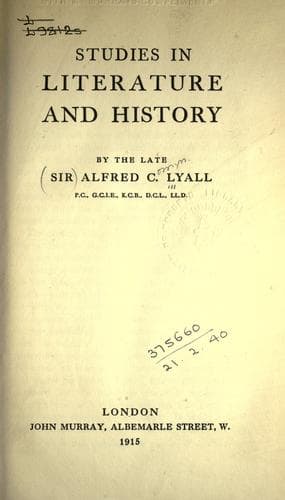
Studies in Literature and HistoryLyall, Alfred C., Sir
Religion
Studies in Literature and History
Lyall, Alfred C., Sir
English literature; History; Literature; Religion; Utilitarianism
The old heroic poets were neither too near to the time of which they
sung or wrote, nor too far from it; and this gave them another special
advantage, they had a good audience. The song, or the story, must have
often been recited before listeners to whom the whole subject was more
or less familiar, who knew the facts and ways of war, the true aspect
and usages of a rough and perilous existence. They were too well
acquainted, at any rate, with such things to be captivated by vague
imaginative descriptions of fighting and refined chivalrous methods of
dealing with a mortal foe, such as are found in the later Romance.
Among primitive folk there would have been no taste for fantastic,
allegoric, and extravagant though highly poetical accounts of
valorous exploits by noble knights, with their tournaments and their
adventures with giants, dwarfs, or enchanters. The tradition was of a
community encompassed by dangers for men and for women, where life and
goods depended on strength and sagacity. And so the original hero was
strictly a practical soldier, a man who knew his business, who had
very few troublesome scruples; he was a man of war from his youth up,
struggling with arduous circumstance; and he usually came at last, as
in actual life, to a bloody though glorious end. For the experience of
a rough age is that the drama mostly finishes tragically, not happily
as in a modern novel. There was always a strain of Romance in the
heroic tale, and softer feelings were never quite absent: but all this
was subordinate to facts: whereas Romance seems to have prevailed and
grown popular in proportion as the writer stood further away from the
actualities, trusted to imagination rather than to authentic
experience, preferred literary ornament to probability, and indeed
took his readers as far away as possible from scenes or situations
which they could recognise or verify.
Public-domain text, read in full here on John Shaqi.
Reviews
Reviews
No reviews yet
Be the first to share your thoughts on this work.
Elsewhere in the archive
Join the Discussion
Join the discussion
Sign in to leave a comment or review.
Sign InorCreate an account